Israel's Nuclear Doctrine Shift Amid US-Iran Tensions Escalation
Today, Israel's partnership with the US has come under scrutiny due to the potential Iran nuclear deal. The development has significant implications for Israel's national security and its ability to defend itself against regional threats. The deal could provide Iran with billions of dollars to rearm and support proxy forces like Hezbollah, posing a direct threat to Israel's security.
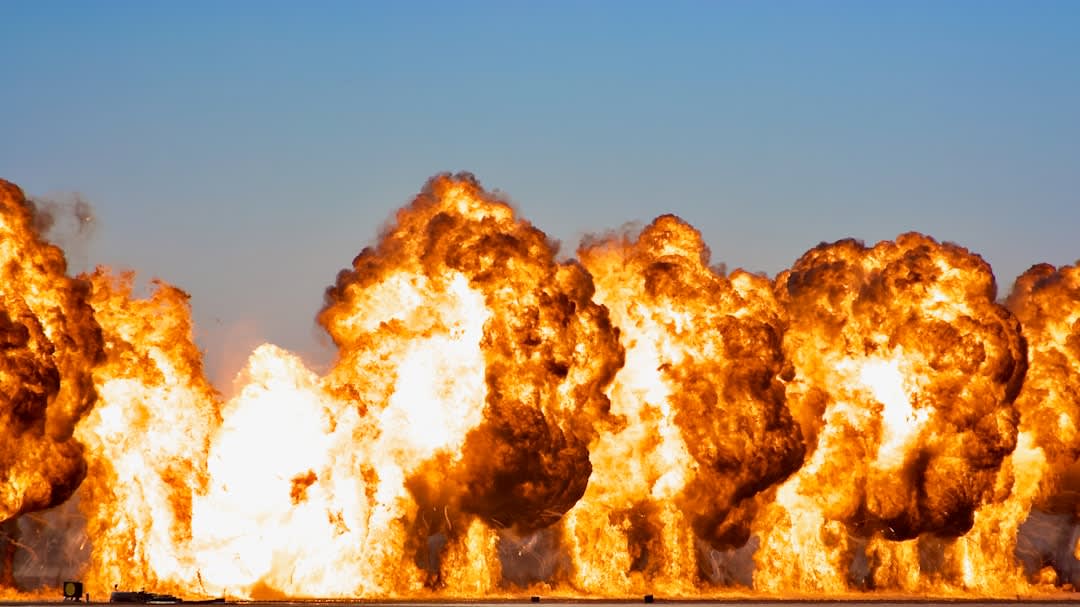
- •The recent developments in the Israel-Iran conflict have significant implications for the global balance of power, particularly in the realm of science and technology.
- •The conflict has highlighted the importance of technological advancements in modern warfare, with both countries investing heavily in cyber warfare capabilities and artificial intelligence-powered military systems.
- •This has sparked a new era of competition, with countries like the United States, China, and India also investing in these technologies to gain a strategic advantage.
The recent developments in the Israel-Iran conflict have significant implications for the global balance of power, particularly in the realm of science and technology. The conflict has highlighted the importance of technological advancements in modern warfare, with both countries investing heavily in cyber warfare capabilities and artificial intelligence-powered military systems. This has sparked a new era of competition, with countries like the United States, China, and India also investing in these technologies to gain a strategic advantage.
The Role of Technology in Modern Warfare
The use of technology in modern warfare has become a key factor in determining the outcome of conflicts. The development of drone technology and hypersonic missiles has changed the nature of warfare, allowing countries to launch precision strikes from a distance. This has also led to a new era of space warfare, with countries competing to develop satellite technology and space-based surveillance systems. The recent conflict between Israel and Iran has highlighted the importance of these technologies, with both countries using them to gain a strategic advantage.
- ▸The use of cyber warfare has become a key factor in modern warfare, with countries using it to disrupt enemy command and control systems.
- ▸The development of artificial intelligence-powered military systems has changed the nature of warfare, allowing countries to launch precision strikes from a distance.
- ▸The use of drone technology has become a key factor in modern warfare, with countries using it to launch precision strikes and gather intelligence.
- ▸The development of hypersonic missiles has changed the nature of warfare, allowing countries to launch precision strikes from a distance.
The Geopolitical Implications of Technological Advancements
The geopolitical implications of technological advancements are far-reaching, with countries competing to develop and acquire new technologies to gain a strategic advantage. The recent conflict between Israel and Iran has highlighted the importance of these technologies, with both countries using them to gain a strategic advantage. The development of quantum computing and 5G technology has also changed the nature of warfare, allowing countries to launch precision strikes and gather intelligence.
Did You Know? The development of quantum computing has the potential to break many encryption algorithms currently in use, highlighting the need for new encryption technologies to be developed.
The Role of International Cooperation in Regulating Technological Advancements
The role of international cooperation in regulating technological advancements is crucial, with countries needing to work together to develop common standards and regulations. The development of international law and treaties has become essential in regulating the use of technological advancements in warfare, with countries needing to work together to prevent the misuse of these technologies. The recent conflict between Israel and Iran has highlighted the importance of international cooperation, with countries needing to work together to prevent the escalation of conflicts.
- ▸The development of international law has become essential in regulating the use of technological advancements in warfare.
- ▸The use of treaties has become a key factor in regulating the use of technological advancements in warfare, with countries needing to work together to develop common standards and regulations.
- ▸The role of United Nations has become crucial in regulating the use of technological advancements in warfare, with countries needing to work together to prevent the misuse of these technologies.
Conclusion
In conclusion, the recent developments in the Israel-Iran conflict have significant implications for the global balance of power, particularly in the realm of science and technology. The development of technological advancements has changed the nature of warfare, with countries competing to develop and acquire new technologies to gain a strategic advantage. The role of international cooperation in regulating technological advancements is crucial, with countries needing to work together to develop common standards and regulations.
Tags
Concepts Mentioned
space-based surveillance systems
Space-based surveillance systems are networks of satellites and ground stations that monitor and track objects in space, providing critical information for national security, environmental monitoring, and scientific research. These systems enable real-time tracking of satellites, space debris, and other celestial objects, facilitating the prevention of collisions and ensuring the safety of space operations. For instance, the US Space Surveillance Network tracks over 27,000 artificial objects ...
satellite technology
Satellite technology involves using artificial satellites to transmit data. It is significant for global communication and navigation. The GPS system is a notable example.
space warfare
Space warfare refers to military operations in space. It has significant implications for global security. The US has a Space Force, established in 2020.
hypersonic missiles
A hypersonic missile is a type of missile that can travel at speeds above Mach 5, or five times the speed of sound, making it extremely difficult to intercept. This technology has significant implications for military operations, allowing for rapid and precise strikes on targets. The US military has developed the AGM-183 ARRW, a hypersonic missile capable of reaching speeds of up to Mach 20.
drone technology
Drone technology refers to the use of unmanned aerial vehicles (UAVs) equipped with sensors, cameras, and communication systems to capture and transmit data. This technology has significant applications in fields such as surveillance, environmental monitoring, and package delivery. For instance, drones are being used to inspect and monitor oil pipelines in remote areas.
artificial intelligence
Artificial intelligence (AI) refers to the development of computer systems that can perform tasks typically requiring human intelligence, such as learning, problem-solving, and decision-making. This field has significant implications for various industries, including healthcare, finance, and transportation. For instance, AI-powered virtual assistants, like Siri and Alexa, can understand and respond to voice commands.
cyber warfare
Cyber warfare refers to digital attacks on computer systems and networks. It has significant implications for national security. The Stuxnet worm is a notable example.
Log in to like, comment, and join the discussion.