Historical Context
Today the Supreme Court ordered the Archaeological Survey of India to conduct a joint archaeological survey of the Shahi Idgah mosque and the contested Dera Keshava Rai temple site in Mathura. The ruling revives a decades‑long dispute over whether the Mughal‑era mosque was built atop a pre‑existing Krishna shrine, highlighting tensions between heritage preservation and communal narratives. The court set a six‑month deadline, and the ASI will allocate ₹2.5 crore for excavations, a figure that underscores the project's scale.
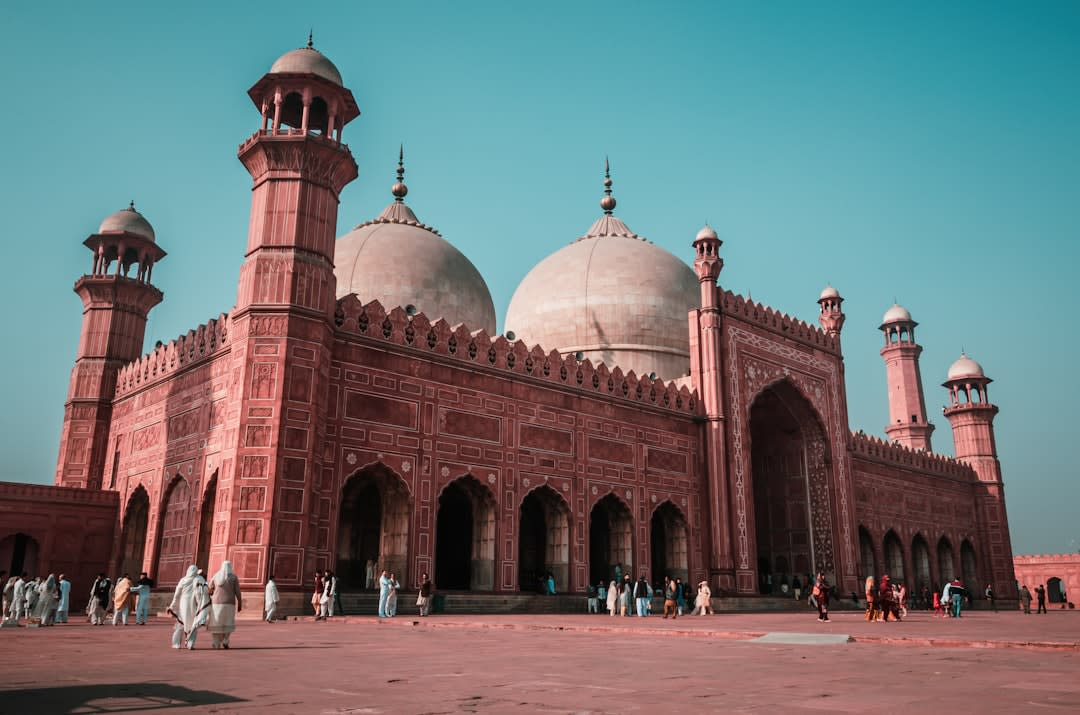
- •Krishna Janmabhoomi Dispute: Mughal Legacy, Legal Battles and Heritage Diplomacy
Krishna Janmabhoomi Dispute: Mughal Legacy, Legal Battles and Heritage Diplomacy
The Supreme Court‑monitored petition seeks to hand over the 13.77‑acre plot that houses both the Shahi Idgah mosque and the historic Krishna Janmasthan temple complex in Mathura. The claim revives a saga that began when Raja Bir Singh Deo Bundela erected the Dera Keshava Rai temple in 1618, only for it to be razed by Emperor Aurangzeb in 1670. Recent court filings revive the question of who legally owns the land and what the site means for India’s cultural identity.
The Dera Keshava Rai temple was commissioned in 1618, during Emperor Jahangir’s reign, on a spot identified by the Bundela ruler as the birthplace of Lord Krishna.
- ▸1618: Temple construction ordered by Raja Bir Singh Deo Bundela.
- ▸1670: Demolition ordered by Emperor Aurangzeb, ending centuries of worship.
- ▸1889: Archaeological Survey of India (ASI) recorded the site’s antiquity.
Historians diverge on Aurangzeb’s motives. American scholar Audrey Truschke argues the demolition was a political move to curb Maratha support for Shivaji’s escape in 1666, while Indian historian Jadunath Sarkar cites a 1669 imperial edict that targeted all Hindu places of worship, including the Keshava Rai temple, after his brother Dara Shikoh erected a stone railing around it.
- ▸Truschke’s view: demolition linked to suppression of Jat uprisings and punishment of Mathura Brahmins.
- ▸Sarkar’s view: Aurangzeb’s order to replace the temple’s railing with a mosque and rename the city “Islamabad.”
The land changed hands repeatedly after the Mughal decline. The East India Company seized the district in 1803; in 1815, Raja Patni Mal bought the 13.77‑acre parcel at auction. His descendants sold it to Congress leader Pandit Madan Mohan Malviya in 1944 for ₹13,400, a transaction financed by industrialist Jugal Kishore Birla. In 1951, Birla founded the Shri Krishna Janmabhoomi Trust to fulfil the vision of a new temple, with a covenant that the property could not be sold or pledged.
- ▸1803: East India Company assumes control of Mathura district.
- ▸1815: Raja Patni Mal acquires the land.
- ▸1944: Sale to Malviya for ₹13,400, funded by Jugal Kishore Birla.
- ▸1951: Formation of Shri Krishna Janmabhoomi Trust.
Mughal Architectural Policy and Temple Demolitions
The Mughal Empire is renowned for its synthesis of Persian, Timurid, and indigenous Indian styles, producing iconic structures such as the Taj Mahal and Agra Fort—both listed as UNESCO World Heritage Sites. Core features include the use of red sandstone and marble, large central domes, intricate pietra dura inlay, and a hierarchical layout that reflects the empire’s centralized diwan system.
- ▸Red sandstone and marble juxtaposition for visual contrast.
- ▸Char‑bagh garden layout symbolising paradise.
- ▸Iwan arches framing grand entrances.
- ▸Central dome representing celestial authority.
Aurangzeb’s reign marked a departure from the earlier patronage of Hindu architecture. His policy, documented in imperial farmans, ordered the demolition of temples that he deemed politically threatening, such as the Keshava Rai temple, and the erection of mosques in their place. The removal of Dara Shikoh’s stone railing around the temple underscores how architecture became a tool of imperial authority.
- ▸1669 farman: directive to destroy Hindu temples and schools.
- ▸Replacement of temple structures with mosques to assert Islamic dominance.
- ▸Use of forced labor for mosque construction, reinforcing political control.
These actions left a layered architectural legacy: surviving Mughal monuments coexist with ruins of demolished Hindu sites, complicating contemporary heritage narratives.
Legal and Ownership Saga
In 1968, the Krishna Janmasthan Seva
Tags
Concepts Mentioned
UNESCO World Heritage Site
UNESCO World Heritage Site is a landmark or area designated by the United Nations Educational, Scientific and Cultural Organization for its outstanding cultural or natural value. It obliges member states to protect and preserve it for humanity's shared heritage. The Great Barrier Reef, inscribed in 1984, spans over 2,300 km of coral reefs and supports thousands of species.
Mughal Empire
The Mughal Empire was a vast and influential Islamic state that ruled much of the Indian subcontinent from the early 16th to the mid-19th century. It is significant for its cultural, architectural, and administrative achievements, including the construction of the Taj Mahal, a UNESCO World Heritage Site and one of the Seven Wonders of the Medieval World.
Log in to like, comment, and join the discussion.