What the Recruitment Figures Mean
Today the Bihar government announced its 72nd recruitment cycle, opening 1,186 vacancies across Group A and Group B administrative posts such as Deputy Superintendent of Police and Sub‑Divisional Magistrate. The announcement comes amid a political debate in which the Congress party, defending its record, says it has generated over 67,000 government jobs in the past two years, while the opposition accuses it of inflating figures. If filled, the new hires would increase the state's civil service strength by roughly 0.5 % and could shift the balance of administrative capacity ahead of the upcoming state elections.
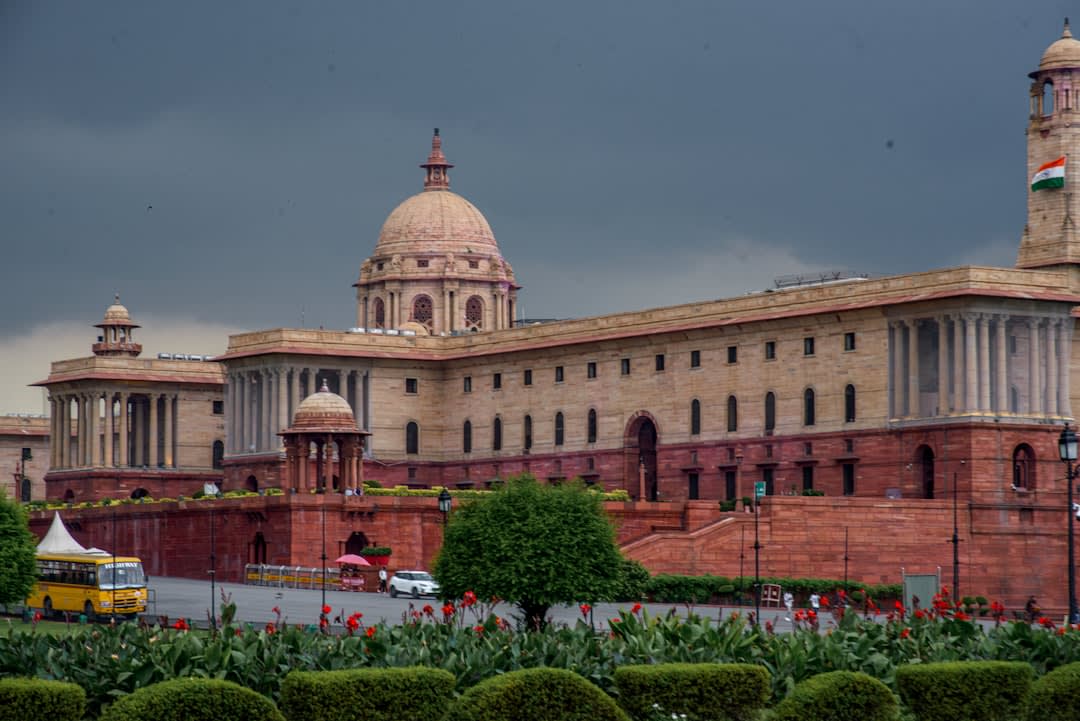
- •Telangana Recruitment Drive vs BRS Claims: What the Numbers Reveal
Telangana Recruitment Drive vs BRS Claims: What the Numbers Reveal
The SC‑ST Welfare Minister Adluri Laxman Kumar told a press conference on Saturday that the Congress‑led Telangana government created 67,763 government jobs in the past two years and was close to filling another 13,197 posts. He contrasted this with the BRS working president K.T. Rama Rao’s allegation that unemployed youth only carried examination hall tickets and woke up to paper‑leak scandals. The minister also claimed that the Telangana Public Service Commission (TGPSC) had restored public confidence after completing 17,326 appointments across four groups, alongside recruiting 10,006 teachers through the Mega DSC and 8,400 teachers for residential institutions.
The sheer volume of appointments underscores the scale of state‑run recruitment. In the last two years, Telangana filled:
- ▸562 Group‑I posts, 783 Group‑II posts, 1,370 Group‑III posts and 8,143 Group‑IV posts, totalling 17,326 appointments.
- ▸10,006 teachers via the Mega Direct Service Commission (DSC) scheme.
- ▸8,400 teachers for residential schools under the state’s education drive.
- ▸16,067 youth recruited into the police department (partial figure reported).
These numbers, if accurate, represent a substantial expansion of the civil‑service workforce, directly impacting service delivery in health, education, and law‑enforcement. Yet the political sparring over “paper‑leak” allegations raises questions about the transparency of the recruitment process and the mechanisms that safeguard merit.
Legal Framework for Civil Service Appointments
Recruitment to the state civil services rests on constitutional and statutory foundations. Article 309 empowers the President to constitute All‑India Services, while Article 311 guarantees due‑process protection for civil servants against arbitrary dismissal. At the state level, the Telangana Public Service Commission operates under the Public Service Commission Act, tasked with conducting examinations, shortlisting candidates, and ensuring merit‑based selection.
- ▸Article 309 provides the legal basis for creating a professional bureaucracy.
- ▸Article 311 mandates a fair inquiry before any removal, reinforcing job security.
- ▸The Right to Information Act 2005 enables citizens to request recruitment data, fostering accountability.
- ▸TGPSC’s mandate includes publishing vacancy notices, exam schedules, and result sheets on its official portal.
- ▸Any deviation from prescribed procedures can be challenged through judicial review.
These provisions collectively bind the executive to a transparent recruitment regime, obligating the state to disclose selection criteria, cut‑off marks, and appointment letters.
Accountability and Transparency Mechanisms
Beyond constitutional guarantees, practical oversight hinges on institutional checks. The RTI route, coupled with periodic audits by the State Audit Department, can expose irregularities such as paper‑leak scandals. Moreover, the presence of an independent commission reduces political interference.
- ▸RTI applications have historically uncovered discrepancies in exam answer keys.
- ▸The State Audit Department conducts annual reviews of recruitment expenditures.
- ▸TGPSC publishes a “Recruitment Dashboard” detailing vacancies, applicants, and hires.
- ▸Complaints of malpractice are investigated by the State Vigilance Commission.
- ▸Successful candidates receive appointment letters directly from the department, not through intermediaries.
When these mechanisms function, they reinforce public confidence; when they falter, they become fodder for opposition narratives, as seen in the current Telangana debate.
Did You Know? The first Judicial Review in India, the State of Madras v. Sukumar (1952), affirmed the courts’ power to scrutinise administrative actions, laying the groundwork for today’s oversight of public‑service recruitment.
Parallel Challenges in Other States
Telangana is not alone in grappling with recruitment bottlenecks. In Bihar, the Bihar Public Service Commission postponed the Integrated 72nd Combined Preliminary Competitive Examination originally slated for 26 July 2026, citing “unavoidable reasons.” This delay stalls the entry of fresh officers into the state bureaucracy.
- ▸The postponement notice was issued by the Examination Controller of BPSC.
- ▸Candidates were instructed to monitor the BPSC website for a revised timetable.
- ▸The delay affects appointments for posts such as Deputy Superintendent of Police and Rural Development Officer.
- ▸No new date has been announced as of the latest notification.
- ▸The postponement adds uncertainty for thousands of aspirants awaiting government jobs.
Both states illustrate how procedural glitches—whether alleged paper leaks or exam postponements—can erode trust in the merit‑based recruitment system, emphasizing the need for robust procedural safeguards.
Judicial Oversight of Public Services
The Kerala High Court’s recent inspection of the Mental Health Centre in Thiruvananthapuram highlights another dimension of accountability: judicial scrutiny of service delivery. Judges Devan Ramachandran and Basant Balaji identified infrastructure deficits, staff shortages, and safety concerns, promising “necessary directives” to the government.
- ▸The inspection covered inpatient blocks, women’s wards, and a high‑security forensic unit.
- ▸Officials reported a shortage of personal‑care assistants for vulnerable patients.
- ▸Safety and security lapses were noted, especially in the forensic block.
- ▸The court’s findings will be formalised as judicial orders, compelling corrective action.
- ▸Such interventions reinforce the principle that public institutions must meet constitutional standards of dignity and care.
The Kerala episode underscores how courts can act as a backstop when administrative mechanisms falter, ensuring that the promises of recruitment translate into effective service delivery.
Significance and the Way Forward
The Telangana recruitment saga, juxtaposed with Bihar’s exam delay and Kerala’s judicial inspection, paints a broader picture of India’s civil‑service ecosystem: ambitious hiring targets coexist with procedural vulnerabilities. Strengthening transparency through RTI,
Tags
Concepts Mentioned
Public Service Commission
A Public Service Commission is a government agency that oversees civil service appointments. It plays a crucial role in ensuring merit-based selections. India has a Union Public Service Commission.
Judicial Review
Judicial review is the power of courts to assess the constitutionality of legislative and executive actions. It safeguards the rule of law by ensuring that governmental measures do not exceed constitutional limits. In the United States, the principle was firmly established in the 1803 Supreme Court decision Marbury v. Madison, which declared an act of Congress void.
Right to Information Act, 2005
The Right to Information Act, 2005, is a law granting citizens access to government information. It promotes transparency and accountability, enabling citizens to request and obtain information from public authorities. The Act applies to all government bodies.
Telangana Public Service Commission
The Telangana Public Service Commission is a constitutional body that advises the state government on recruitment, promotions and disciplinary matters for its civil services. It safeguards merit and transparency in the state's bureaucracy, influencing the quality of public administration. Since its establishment in 1956, it has conducted thousands of selections for the Telangana cadre.
Article 311
Article 311 is a provision in the Constitution of India that safeguards civil servants from arbitrary dismissal, removal, or reduction in rank. It requires a government inquiry and parliamentary approval before any punitive action, ensuring bureaucratic independence. For example, a judge must confirm the removal of a senior IAS officer after a proper inquiry.
Article 309
Article 309 of the Indian Constitution authorises Parliament to create All‑India Services and to set the rules for recruitment, appointment and disciplinary control of officers serving both the Union and the states. It underlies the Indian Administrative, Police and Forest Services, and was amended in 1971 to allow recruitment via a central service commission instead of the President alone.
Log in to like, comment, and join the discussion.