Prohibitory Orders and the Legal Framework
Today, the Kozhikode District Police Chief convened a forum with leaders from residents’ associations spanning 16 police‑station jurisdictions to address pressing security concerns. The meeting underscores a growing shift toward community‑policing models in India, aiming to integrate civilian input into patrol planning and enforcement drives. Officials said the forum’s recommendations could be implemented within weeks, potentially increasing patrol frequency by up to 20 % in high‑risk neighborhoods.
- •Delhi Protest Ban and Kozhikode Digital Patrol: Police Reform in Action
Delhi Protest Ban and Kozhikode Digital Patrol: Police Reform in Action
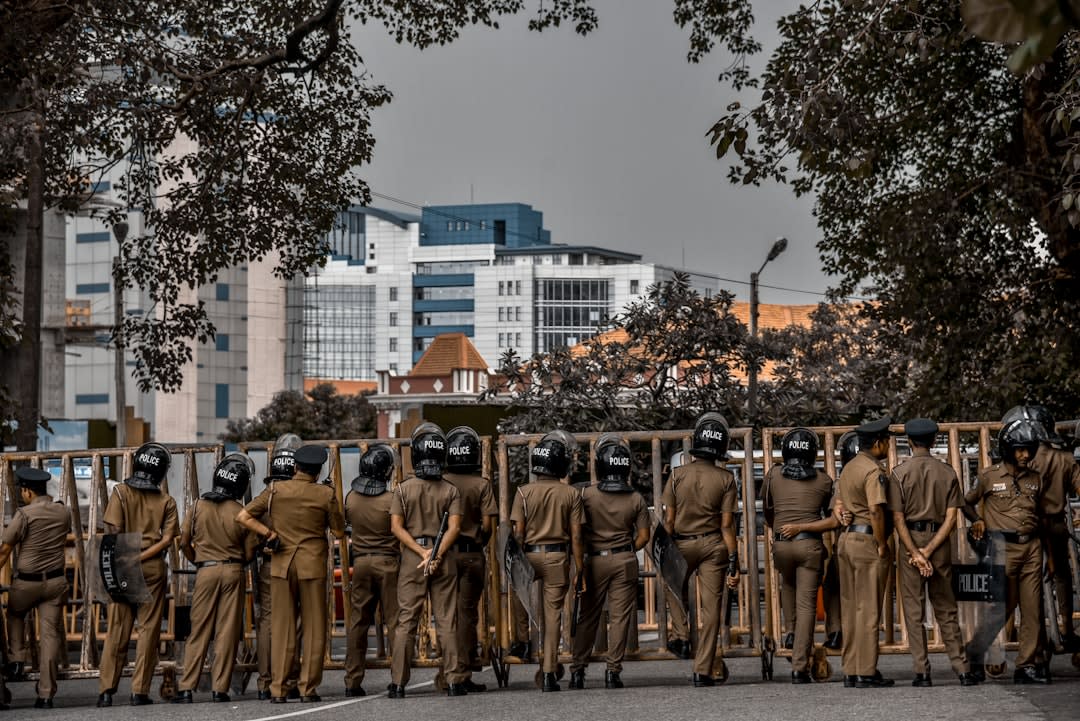
Delhi police on July 20 issued a prohibitory order under Section 163 of the BNSS that bars any march of five or more people outside the designated Jantar Mantar site. At the same time, Kozhikode police launched a WhatsApp network of 350 residents’‑association functionaries to speed up information exchange under the “Operation Toofan” anti‑drug drive. Both moves spotlight the tension between top‑down security directives and bottom‑up community‑policing aspirations.
The Delhi administration invoked the BNSS (formerly Section 144 of the Criminal Procedure Code) to pre‑empt the Cockroach Janta Party’s “Chalo Sansad” march. The order, posted by Deputy Commissioner of Police Sachin Sharma on X, warned that violators could be prosecuted under Section 223 BNSS.
- ▸The order applies district‑wide in New Delhi, covering all public spaces except Jantar Mantar.
- ▸It specifically targets assemblies of five or more persons, a threshold set by the BNSS.
- ▸Violation carries a penalty of up to two years’ imprisonment and a fine, as per Section 223 BNSS.
The legal basis rests on the state’s power to maintain public order, yet it collides with the constitutional guarantee of peaceful assembly under Article 19(1)(a). The Right to Information Act 2005 enables citizens to request the exact wording of such orders, fostering transparency and allowing judicial review.
Community Policing in Kozhikode: Operation Toofan
In a parallel development, Kozhikode’s Social Policing Division convened a “Janamaithri Jagratha Sadas” meeting, unveiling a WhatsApp group for residents’‑association leaders. The platform aims to bridge the information gap that has long hampered rapid police response to drug‑trafficking networks.
- ▸Around 350 functionaries from 16 police‑station jurisdictions joined the group.
- ▸The initiative was announced by District Police Chief A.P. Shoukathali and Assistant Commissioner T.P. Sumesh.
- ▸It complements “Operation Toofan,” a city‑wide anti‑drug campaign launched earlier this year.
By leveraging instant messaging, the police hope to convert neighbourhood vigilance into actionable intelligence, a core tenet of Community Policing that emphasizes the “eyes and ears” of citizens.
Did You Know? The first formal community‑policing experiment in India was the “Neighbourhood Watch” pilot in Chandigarh in 1999, which later informed the National Crime Records Bureau’s guidelines.
From the Prakash Singh Case to Present: Evolution of Police Reforms
The Supreme Court’s 2006 verdict in the Prakash Singh case mandated comprehensive police reforms, directing the Centre to amend the Police Act and establish State Police Complaints Authorities. The Court’s directions birthed the Police Reforms Act 2006, which introduced performance‑based appraisal, tenure security, and a citizen‑friendly grievance mechanism.
- ▸The Court ordered the creation of a State Police Complaints Authority in every state.
- ▸It required the establishment of a Police Establishment Board to oversee recruitment and promotion.
- ▸The reforms called for regular audits by the National Crime Records Bureau to monitor crime trends.
Despite these mandates, implementation has been uneven. While metropolitan police forces have adopted performance dashboards, many district units still rely on ad‑hoc arrangements, as evident in the ad‑hoc WhatsApp group in Kozhikode.
Implementation Gaps and Accountability Mechanisms
The juxtaposition of a top‑down prohibitory order and a grassroots digital platform reveals persistent gaps. The BNSS order demonstrates the state’s reliance on coercive tools, whereas Operation Toofan reflects a shift toward collaborative policing. However, both raise accountability questions.
- ▸The BNSS order lacks a stipulated review period, limiting judicial oversight.
- ▸The WhatsApp group operates without a formal data‑privacy protocol, risking misuse of personal information.
- ▸Neither mechanism incorporates an independent audit trail, a shortfall the Police Reforms Act explicitly sought to remedy.
These deficiencies underscore the need for robust oversight bodies, such as State Police Complaints Authorities, to evaluate both coercive and cooperative measures.
Way Forward: Institutionalising Last‑Mile Oversight
To reconcile security imperatives with democratic rights, a two‑pronged approach is essential. First, any prohibitory order should be time‑bound, published on an accessible portal, and subject to periodic judicial review under the Right to Information Act 2005. Second, community‑policing initiatives must be institutionalised through formal memoranda of understanding, data‑security standards, and regular reporting to the State Police Complaints Authority.
Embedding these safeguards will transform ad‑hoc arrangements into durable components of the police reform architecture envisioned in the Prakash Singh judgment.
Concepts Mentioned
National Crime Records Bureau (NCRB)
The National Crime Records Bureau is India's central repository of crime data. It plays a crucial role in maintaining national crime statistics. The bureau publishes the annual Crime in India report.
Police Reforms Act 2006
The Police Reforms Act 2006 is legislation enacted by the Indian Parliament to overhaul policing structures, accountability and community relations across the country. It introduced a statutory framework for independent police complaints authorities and mandated regular performance audits, aiming to curb corruption and politicisation. For example, the act led to the creation of the Delhi Police Complaints Authority in 2007.
Prakash Singh Case (2006)
The Prakash Singh Case is a landmark Supreme Court judgment. It directed states to implement police reforms, ensuring autonomy and accountability. The court ordered the creation of state security commissions.
Community Policing
Community policing is a strategy that encourages police to build partnerships with local residents, businesses, and civic groups to collaboratively identify and solve problems that affect public safety. Its significance lies in fostering trust, reducing crime, and improving police legitimacy. For example, the New York City Police Department’s “Neighborhood Policing” units assign officers to specific precincts to engage directly with community members.
Right to Information Act, 2005
The Right to Information Act, 2005, is a law granting citizens access to government information. It promotes transparency and accountability, enabling citizens to request and obtain information from public authorities. The Act applies to all government bodies.
Section 163 of the BNSS
Section 163 of the BNSS outlines the procedure for removal of a member from the Board of Governors, requiring a two‑thirds majority vote and providing for a right to be heard. It is significant because it ensures accountability and due process within the BNSS governance structure. In 2022 the Ministry invoked it to dismiss a board member over financial irregularities.
Log in to like, comment, and join the discussion.