What Sparked the Protests?
On July 22, 2026, Delhi’s Central Secretariat and Janpath metro stations were closed after the Cockroach Janta Party’s sit‑in at Jantar Mantar intensified, demanding the resignation of Union Education Minister Dharmendra Pradhan. The protest, described by officials as the largest post‑independence movement, follows a series of student and opposition actions across the country targeting the minister over the NEET paper leak and related grievances. National spokesperson Ashutosh Ranka warned that “millions more” could converge on Delhi if the government does not meet the demands, while police have already used water cannons and batons against similar marches in Patna.
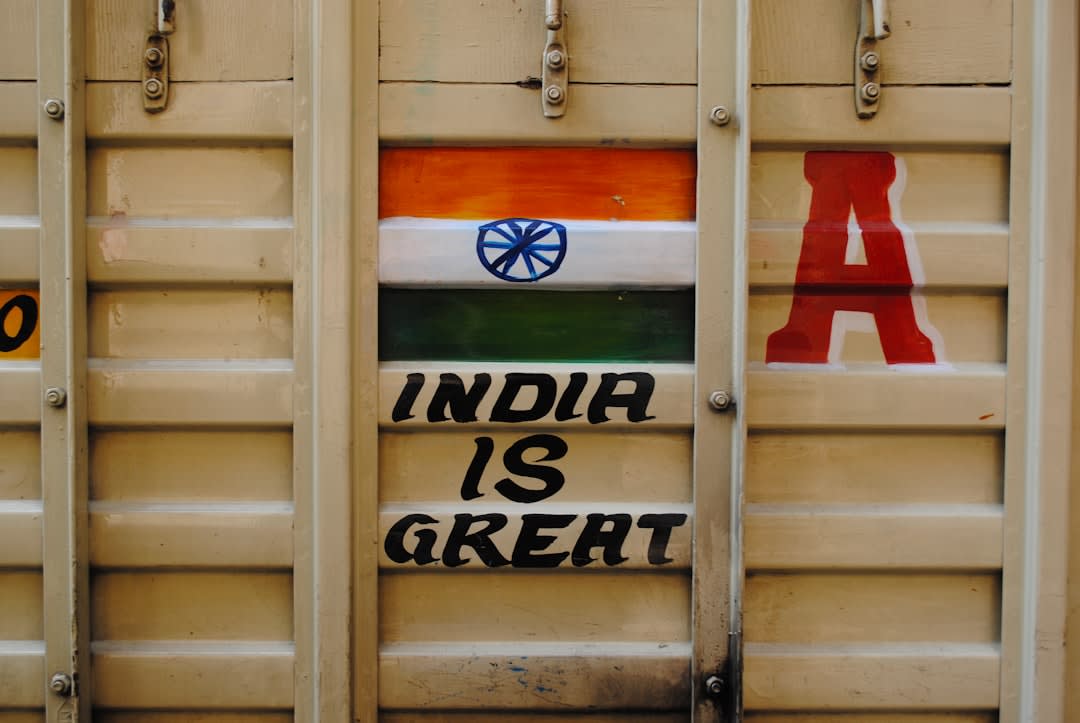
- •NEET Leak Protests: Echoes of Quit India Movement in Delhi
NEET Leak Protests: Echoes of Quit India Movement in Delhi
On July 21‑22 2026, students and opposition leaders staged a sit‑in outside Prime Minister Narendra Modi’s residence demanding the resignation of Union Education Minister Dharmendra Pradhan over a NEET paper leak. The protest was met with water‑cannon fire, baton charges, detentions of senior Congress figures and a temporary internet shutdown in central Delhi.
The immediate trigger was a leak of the National Eligibility cum Entrance Test (NEET) answer key, which ignited anger among aspirants and their families. Opposition leaders, including Rahul Gandhi, Akhilesh Yadav and Priyanka Gandhi Vadra, joined the demonstrators at the Prime Minister’s house, demanding accountability.
- ▸July 21 2026: Education Minister Dharmendra Pradhan posted on X that the opposition was “exploiting students as political tools”.
- ▸July 21 2026: Delhi Police used water‑cannon and baton‑charged to disperse the crowd near Gandhi Maidan.
- ▸July 21 2026: Rahul Gandhi, Akhilesh Yadav and Priyanka Gandhi Vadra were detained after a scuffle with police.
- ▸July 21 2026: Mobile‑internet services were shut down in parts of Central Delhi, remaining offline until the evening of July 20.
- ▸July 22 2026: Central Secretariat and Jantar Mantar metro stations were closed as the Cockroach Janata Party (CJP) continued its sit‑in.
These actions underscore a widening chasm between a mobilised youth and a government wary of disruption during the monsoon session of Parliament.
Historical Parallel: Quit India Movement
The 1942 Quit India Movement, launched by the Indian National Congress under the leadership of Mahatma Gandhi, offers a striking historical mirror. Gandhi’s call for “Do or Die” on 8 August 1942 galvanized a nation into mass civil disobedience, demanding an end to British rule.
- ▸8 August 1942: Gandhi’s “Quit India” speech at the All‑India Congress Committee meeting in Bombay.
- ▸Mid‑August 1942: British authorities arrested Congress leaders, including Gandhi, Jawaharlal Nehru and Sardar Patel.
- ▸1942‑1945: Nationwide strikes, sabotage of railways and factories, and spontaneous protests across villages and towns.
- ▸Post‑1945: The movement’s pressure contributed to the British decision to transfer power, culminating in independence on 15 August 1947.
The 2026 protests echo the Quit India ethos: a non‑violent demand for systemic change, a swift crackdown by state apparatus, and a rallying of disparate social groups around a common grievance.
Mechanics of Civil Disobedience Then and Now
Both episodes rely on the principle of non‑violent resistance, yet the tools and contexts differ markedly.
- ▸Communication: In 1942, the Congress relied on underground pamphlets and word‑of‑mouth; in 2026, social media platforms like X and instant messaging enable rapid mobilisation, but also expose activists to digital surveillance.
- ▸State Response: The British employed mass arrests and censorship of newspapers; the Indian government deployed water‑cannon, internet black‑outs and metro closures, reflecting a modern security‑state apparatus.
- ▸Legal Framework: The 1942 movement operated under colonial law with limited constitutional safeguards. Today, any protest must navigate the Indian Constitution’s guarantees of freedom of speech and assembly, balanced against provisions such as Section 144 of the Criminal Procedure Code that empower authorities to restrict gatherings.
Legal and Institutional Responses
The Delhi Police’s actions raise questions about the proportionality of force and the protection of democratic rights.
- ▸Section 144: Invoked to prohibit assemblies, often criticized for being used pre‑emptively rather than reactively.
- ▸Article 19(1)(a) & (b): Guarantees freedom of speech and peaceful assembly; any restriction must be “reasonable” and “in the interest of public order”.
- ▸Judicial Oversight: Past judgments, such as the Maneka Gandhi Judgment (1978), have broadened the interpretation of personal liberty, but the courts have yet to adjudicate the legality of internet shutdowns in protest contexts.
The tension between maintaining public order and upholding constitutional freedoms is a recurring theme from the Quit India era to contemporary India.
Did You Know? The Quit India Movement saw over 1 million arrests, a figure that dwarfs the number of detentions recorded during the 2026 NEET protests, highlighting the scale of state repression in colonial versus democratic contexts.
Significance and Way Forward
The NEET protests illustrate how historical narratives of anti‑colonial struggle continue to shape contemporary political discourse. By invoking the spirit of the Quit India Movement, opposition leaders frame their demand for accountability as a moral imperative rather than mere partisan rivalry. However, the state's reliance on coercive measures risks eroding public trust in democratic institutions.
A sustainable resolution would require:
- ▸Transparent Inquiry: An independent committee, perhaps modeled on the 1945 Sarkar Committee on public grievances, to investigate the NEET leak.
- ▸Policy Reform: Strengthening examination security through digital encryption and audit trails, reducing the likelihood of future leaks.
- ▸Dialogue Mechanism: Institutionalising a regular consultative forum between student bodies, the Ministry of Education and the opposition, ensuring grievances are heard before escalating to street protests.
By learning from the Quit India experience—where mass mobilisation forced political change—today’s stakeholders can channel dissent into constructive reform rather than cyclical confrontation.
Concepts Mentioned
Maneka Gandhi Judgment
The Maneka Gandhi Judgment is a landmark Supreme Court decision. It established the right to travel abroad as part of personal liberty. The 1978 judgment ruled in favor of Maneka Gandhi, whose passport was revoked by the government.
Constitution of India
The Constitution of India is the supreme law governing the country. It matters for UPSC as it is a key component of the syllabus. Adopted in 1949, it outlines the framework of the Indian government.
Mahatma Gandhi
Mahatma Gandhi (1869–1948) was the preeminent leader of India's non‑violent independence movement, whose philosophy of satyagraha inspired civil‑rights struggles worldwide. He mobilised millions through campaigns such as the 1930 Salt March, a 240‑mile protest against British salt taxes that demonstrated the power of peaceful mass civil disobedience.
Indian National Congress
The Indian National Congress is a prominent political party. It played a significant role in India's independence movement. Founded in 1885, it is one of the oldest parties.
Quit India Movement
The Quit India Movement was a mass civil disobedience movement launched by Mahatma Gandhi in 1942, demanding immediate independence from British colonial rule. It was a significant turning point in India's struggle for freedom, with widespread protests and demonstrations taking place across the country. Over 60,000 people were arrested during the movement.
Log in to like, comment, and join the discussion.