Historical Roots of Beat Policing and Reform Imperatives
Today, Karnataka's Director General and Inspector General of Police sent a circular ordering police commissioners, range inspectors, and senior officers to be held responsible for lapses under the state's newly revamped beat policing framework. The move follows a broader push for police reform triggered by the Supreme Court's Prakash Singh judgment, which called for stronger oversight of law‑enforcement agencies. The directive expands liability to Police Sub‑Inspectors and senior supervisory officers, marking the first codified senior‑level accountability in the state.
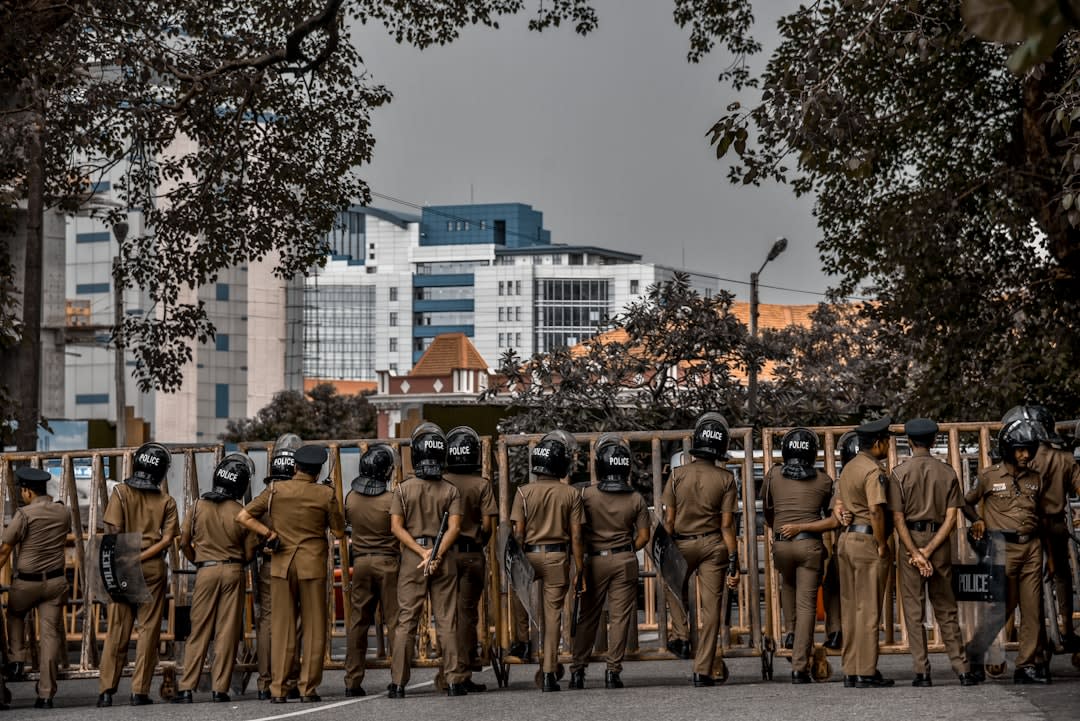
- •Karnataka Beat Policing Revamp: Senior Officers Now Answerable, Student Protests Amplify Accountability Debate
Karnataka Beat Policing Revamp: Senior Officers Now Answerable, Student Protests Amplify Accountability Debate
The Karnataka police issued fresh directives on 14 July 2026, mandating Police Sub‑Inspectors (PSIs) and senior supervisors to share responsibility for lapses in the state’s beat‑policing system. The move follows a petition that highlighted a disparity: constables were routinely penalised, while officers of PSI rank and above escaped substantive accountability. Simultaneously, students in Hassan rallied against the Union Education Minister, citing 89 documented paper‑leak incidents and demanding systemic redress.
Beat policing—assigning a small team of constables to a defined geographic “beat”—was institutionalised in the 1970s to improve community‑level law enforcement. Yet the model suffered from weak supervisory oversight, a flaw repeatedly flagged by the National Police Commission 1976 and later by the Supreme Court in the Prakash Singh Judgment (2006).
- ▸The 1976 commission recommended a clear chain of command linking beat officers to senior supervisors.
- ▸The Prakash Singh case directed states to establish performance‑linked appraisal for senior police officers.
- ▸Karnataka introduced its first beat‑policing framework in 2015, but audits showed 62 % of supervisory complaints remained unresolved.
These recommendations form the constitutional backdrop for police accountability, anchored in Article 21’s guarantee of life and personal liberty, which the courts have interpreted to include protection from police excesses.
Legal Framework Governing Police Accountability
India’s statutory toolkit for police oversight comprises the Right to Information Act 2005, the Police (Amendment) Act 2006, and state‑specific rules. The 2006 amendment, spurred by the Prakash Singh judgment, obliges senior officers to undergo annual performance reviews and to be answerable for “operational failures” within their jurisdiction.
- ▸Section 4 of the Police (Amendment) Act 2006 mandates a written report from each PSI on beat‑level incidents.
- ▸The RTI Act enables citizens to request internal audit reports, fostering transparency.
- ▸Karnataka’s 2026 circular cites these provisions to extend liability to Range Inspectors General and Superintendents of Police.
By invoking these statutes, the state seeks to convert supervisory oversight from a perfunctory exercise into a legally enforceable duty.
Did You Know? The first Indian police force, the Madras Police, was organised on a beat system in 1861, a structure that persists in modified form across many states today.
Karnataka’s Revised Beat System – Concrete Changes
The July 14 2026 communication from the Director General and Inspector General of Police (DG&IGP) instructs all Police Commissioners to re‑examine a June 15 2026 government letter concerning the petition. The revised directives explicitly name PSIs and senior officers as “jointly accountable” for any breach in beat‑level policing.
- ▸The circular mandates quarterly performance audits for each PSI overseeing a beat.
- ▸Non‑compliance now attracts departmental action, including suspension pending inquiry.
- ▸A digital dashboard will track incident reports, accessible to senior officers in real time.
These measures aim to close the accountability gap that previously allowed senior officers to remain insulated from ground‑level failures.
Implementation Gaps and Accountability Challenges
While the policy shift is notable, practical hurdles remain. Front‑line constables often lack the resources to document incidents comprehensively, and senior officers may still delegate responsibility without genuine oversight. Moreover, the RTI mechanism, though powerful, is under‑utilised due to bureaucratic delays.
- ▸In 2024, only 18 % of RTI requests for police performance reports were answered within the stipulated 30‑day window.
- ▸A 2023 internal audit found that 47 % of PSIs failed to submit beat‑level summaries on time.
- ▸The cost of implementing digital dashboards across Karnataka’s 30 districts is estimated at ₹120 crore, a budgetary strain for the state.
Addressing these gaps will require capacity‑building, timely data management, and a culture shift toward proactive supervision.
Student Protests: Extending the Accountability Lens
The protests in Hassan, led by the Students Federation of India (SFI), underscore a broader demand for accountability beyond policing. Protesters highlighted 89 incidents of paper‑leakage in recent years, accusing the National Testing Agency of systemic negligence. The call for the resignation of Union Education Minister Dharmendra Pradhan reflects a perception that accountability mechanisms are uneven across sectors.
- ▸The SFI petition cites 89 documented paper‑leak cases between 2018 and 2025.
- ▸No senior official from the testing agency has faced disciplinary action to date.
- ▸The protests also referenced the forced removal of activist Sonam Wangchuk, linking civil‑society suppression to state accountability deficits.
These grievances illustrate how the principle of shared responsibility, now being reinforced in Karnataka’s police reforms, resonates across education, health, and other public domains.
Significance and the Way Forward
Karnataka’s move to hold senior police officers accountable marks a tangible step toward operationalising the Supreme Court’s directives. If effectively implemented, it could set a precedent for other states grappling with supervisory inertia. However, the success of such reforms hinges on robust monitoring, adequate funding, and an empowered citizenry leveraging tools like the Right to Information Act 2005. The parallel student protests signal that accountability expectations are rising nationwide, urging policymakers to adopt a holistic, cross‑sectoral approach.
Concepts Mentioned
Right to Information Act, 2005
The Right to Information Act, 2005, is a law granting citizens access to government information. It promotes transparency and accountability, enabling citizens to request and obtain information from public authorities. The Act applies to all government bodies.
Article 21
Article 21 of the Indian Constitution guarantees the right to life and personal liberty, making it a fundamental right of every citizen. This provision is significant as it protects individuals from arbitrary arrest, detention, and torture, and ensures that the state cannot deprive anyone of their life or freedom without due process. The Supreme Court has interpreted this right to include the right to a clean environment and access to healthcare.
Prakash Singh judgment
The Prakash Singh judgment is a 2006 Supreme Court ruling that laid down comprehensive guidelines for police reform in India, mandating structural changes to ensure autonomy, accountability and professional standards. Its significance lies in obligating every state to create a Police Establishment Board, a Police Complaints Authority and to regularise recruitment and training.
National Police Commission 1976
The National Police Commission (1976) was a committee set up by the Indian government to review the organization, training, and functioning of the police forces. It recommended sweeping reforms such as the separation of investigation and law‑and‑order duties. Its report led to the creation of the Police Establishment Board in states, exemplified by the 1979 Karnataka Police Reforms Act.
Log in to like, comment, and join the discussion.