The Immediate Trigger: CWMA’s Water Release Order
Karnataka CM D.K. Shivakumar appealed to Tamil Nadu CM C. Joseph Vijay to postpone his scheduled visit after the Cauvery Water Management Authority issued a water‑regulation order, prompting protests in Mandya. The move underscores persistent inter‑state tensions over Cauvery allocations, with Karnataka demanding the Mekedatu balancing reservoir and alleging Tamil Nadu received excess water. The CWMA rejected Karnataka’s appeal, and roughly 400 tmcft—more than double the intended 177 tmcft—has already flowed into Tamil Nadu.
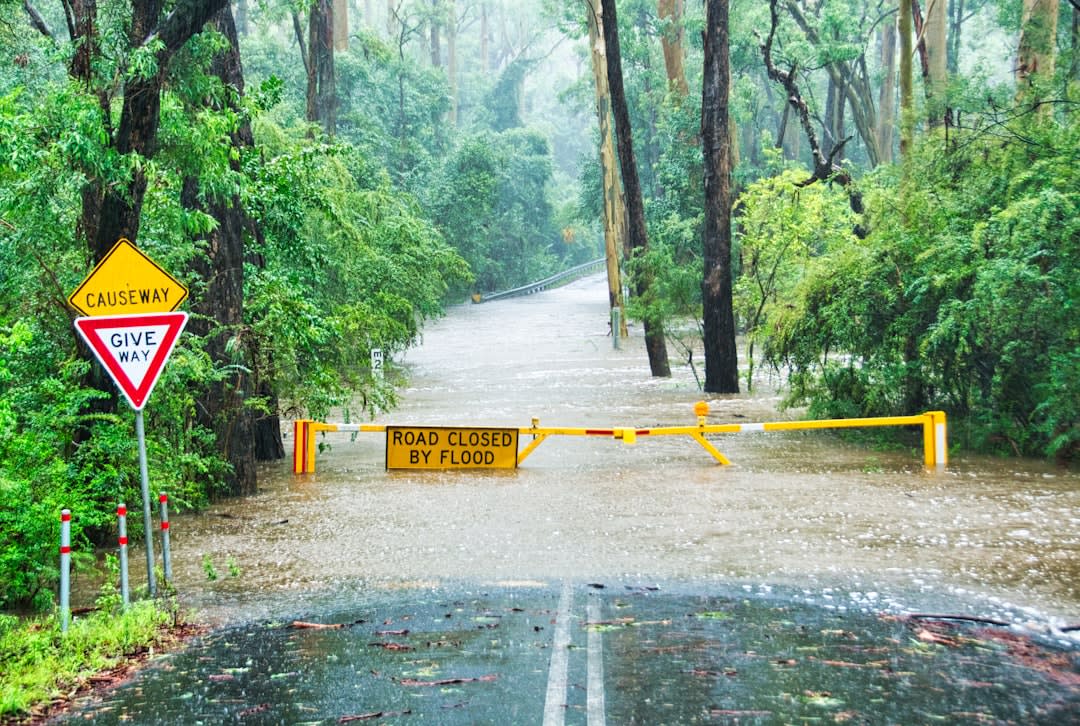
- •Cauvery Water Order Triggers Flood Management Debate: What It Means for Disaster Preparedness
Cauvery Water Order Triggers Flood Management Debate: What It Means for Disaster Preparedness
The Cauvery Water Management Authority (CWMA) on July 30, 2026 rejected Karnataka’s appeal against a directive that mandates the release of water at 3,500 cusecs daily to Tamil Nadu for the next 15 days, starting July 29. The decision has ignited protests in Mandya, forced the postponement of Chief Minister D.K. Shivakumar’s meeting with his Tamil Nadu counterpart, and revived long‑standing concerns about flood preparedness in the basin.
The CWMA’s order stems from a standing order of the Cauvery Water Regulation Committee (CWRC), which set the release rate at 3,500 cusecs. Karnataka had sought a higher quantum, arguing that the “distress formula” justified a release of 9.94 tmcft, but the CWRC capped it at 4.5 tmcft. The state’s appeal was dismissed, prompting the chief minister to call an all‑party meeting on 2 August.
- ▸CWMA rejected Karnataka’s appeal on 30 July 2026.
- ▸The release schedule: 3,500 cusecs per day for 15 days, commencing 29 July 2026.
- ▸Karnataka’s demand: 9.94 tmcft; CWRC’s order: 4.5 tmcft.
- ▸Protests in Mandya included tearing posters of Tamil Nadu CM C. Joseph Vijay’s film Jana Nayagan.
- ▸The chief minister postponed the inter‑state visit to avoid “hard feelings” and maintain a “cordial atmosphere”.
Disaster Management Framework: National Disaster Management Authority and the Sendai Framework for Disaster Risk Reduction
India’s disaster response architecture is anchored by the Disaster Management Act 2005, which created the National Disaster Management Authority (NDMA) as the apex body for policy formulation, capacity building, and coordination. The NDMA aligns its national targets with the global Sendai Framework for Disaster Risk Reduction, which calls for a 50 % reduction in disaster mortality and a 75 % reduction in economic losses by 2030.
- ▸NDMA was constituted in 2005 under the Disaster Management Act.
- ▸The Act mandates State Disaster Management Authorities to prepare State Disaster Management Plans.
- ▸The Sendai Framework’s Target A aims for a 50 % reduction in disaster‑related deaths by 2030.
- ▸Target B seeks a 75 % reduction in economic losses from disasters.
- ▸India’s National Water Policy 2012 emphasizes integrated river basin management as a core component of disaster risk reduction.
Early Warning and Inter‑Agency Coordination in River Floods
Effective flood mitigation hinges on timely alerts and seamless coordination among meteorological, hydrological, and disaster‑response agencies. The India Meteorological Department (IMD) operates an Early Warning System that issues flood advisories based on rainfall forecasts, while the Central Water Commission (CWC) monitors river gauges and disseminates real‑time water‑level data to state authorities.
- ▸IMD’s flood warning bulletin is issued 24 hours before anticipated peak flows.
- ▸CWC operates over 300 gauge stations on the Cauvery and its tributaries.
- ▸State Disaster Management Authorities receive alerts via the National Disaster Management Portal.
- ▸The NDMA’s National Emergency Operation Centre (NEOC) coordinates response actions across ministries.
- ▸Post‑monsoon drills in Karnataka have incorporated simulated releases matching the CWMA’s order.
Did You Know? The Cauvery basin’s floodplain supports ≈ 2 million people, yet only 15 percent of households have access to formal flood insurance, highlighting a critical gap in financial risk mitigation.
Climate Change and Increasing Flood Risks in South India
Scientific assessments indicate that climate change is amplifying monsoon variability, leading to more intense and erratic rainfall over the Deccan plateau. The Intergovernmental Panel on Climate Change (IPCC) warns that South Asia will face heightened flood frequency, demanding adaptive infrastructure and robust disaster‑risk financing.
- ▸IPCC’s 2023 report identifies South Asia as a climate‑vulnerable region for flood hazards.
- ▸Observed trends show a rise in extreme rainfall events over the past decade in Karnataka.
- ▸The National Water Policy 2012 calls for climate‑resilient water‑resource planning.
- ▸NDMA’s 2024 revision of the State Disaster Management Plans incorporates climate‑scenario modelling.
- ▸The Ministry of Environment, Forest and Climate Change has earmarked funds for climate‑smart flood‑control projects.
The Mekedatu Balancing Reservoir: A Double‑Edged Sword
The proposed Mekedatu Balancing Reservoir, a 66 tmcft storage facility, is touted as a flood‑mitigation asset that can regulate peak flows during monsoon surges. However, its design limits irrigation expansion, and the project’s environmental clearances remain contested. If operational, the reservoir could generate ≈ 400 MW of hydropower, but its role in flood control must be evaluated against downstream water‑release
Tags
Concepts Mentioned
Early Warning Systems
An Early Warning System is a network of sensors, monitoring systems, and communication channels designed to detect and alert authorities to potential natural disasters, such as hurricanes, floods, or wildfires, allowing for timely evacuations and emergency responses. This system is crucial for saving lives and minimizing damage. For instance, the US National Weather Service's Storm Prediction Center issues timely warnings for severe weather events.
Disaster Management Act 2005
The Disaster Management Act 2005 is a law governing disaster management in India. It is significant for establishing a national framework for disaster response. The Act created the National Disaster Management Authority.
Sendai Framework for Disaster Risk Reduction
The Sendai Framework is a global plan for disaster risk reduction, aiming to reduce disaster losses. It is significant for promoting resilience and sustainability. Adopted in 2015, it has seven targets.
National Disaster Management Authority
The National Disaster Management Authority is a government agency responsible for disaster management. It plays a crucial role in mitigating disasters. India's NDMA was established in 2005.
Log in to like, comment, and join the discussion.