What the Pre‑test Changes
The Union Ministry of Home Affairs today submitted a proposal to the Supreme Court outlining a digital enumeration system for caste data in the upcoming 2027 Census. This move responds to longstanding criticism of the 2021 SECC’s error‑prone figures and the political sensitivity surrounding caste‑based reservation. A pilot in Bihar’s 2022‑23 caste survey showed a 30% drop in mismatched entries when enumerators used handheld devices pre‑loaded with a curated caste list.
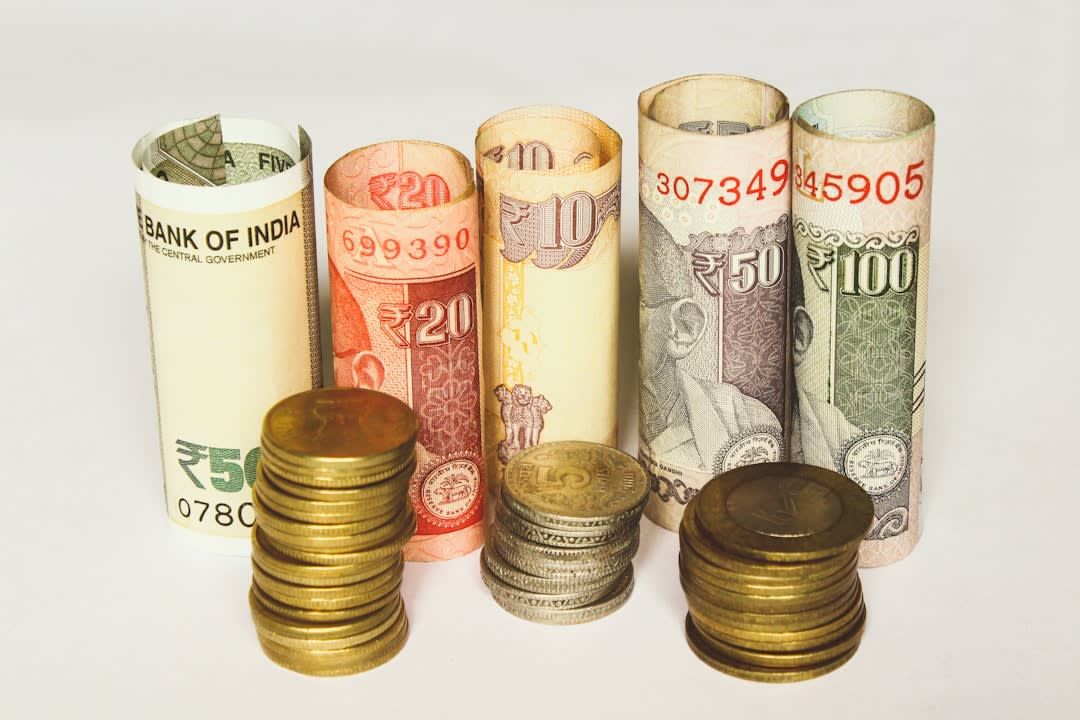
- •Census 2027 Pre‑test: New Methodology for Counting Caste Sparks Debate
Census 2027 Pre‑test: New Methodology for Counting Caste Sparks Debate
The second phase of the 2027 Census, now underway in 16 states and union territories, is testing a revised way to record caste. The pre‑test, which runs until 20 July, replaces the “open column” used in the 2011 Socio‑Economic and Caste Census (SECC) with a curated list of recognised castes and sub‑castes on handheld devices. The outcome will decide whether the government can rely on caste data for affirmative‑action policies and the “creamy‑layer” review that political parties are already contesting.
The new approach asks enumerators to select a caste from a pre‑loaded menu after confirming the respondent’s self‑identification. This contrasts with the earlier method where respondents wrote any name they chose, leading to an unmanageable proliferation of entries.
- ▸The pre‑test covers 16 states and union territories, beginning on 6 July.
- ▸It will conclude on 20 July, after which the Ministry of Home Affairs will finalise the enumeration methodology.
- ▸Enumerators use digital tablets that contain a curated list of roughly 4,000 recognised castes and sub‑castes, a figure comparable to the 4,147 entries recorded in the 1931 Census.
Why the Open‑Ended Method Failed Earlier
The 2011 SECC’s open‑ended column generated more than 46 lakh distinct “caste names”, many of which were surnames, clan identifiers or spelling variations. The resulting dataset was deemed unusable for policy formulation, prompting the Centre to tell the Supreme Court in 2021 that the figures could not underpin reservation decisions.
- ▸The SECC’s 46 lakh entries dwarfed the 4,147 categories listed in the 1931 Census.
- ▸Errors and mismatches were so pervasive that the data could not be cross‑checked with existing reservation rolls.
- ▸The Supreme Court’s 2021 observation highlighted the risk of “statistical noise” overwhelming genuine demographic signals.
Did You Know? Ladakh will become the first region in independent India to conduct a full‑scale caste enumeration as part of the 2027 Census, marking a historic shift in how the nation captures social stratification.
Constitutional and Legal Imperatives
India’s Constitution explicitly forbids caste‑based discrimination and untouchability, while also mandating affirmative action for historically disadvantaged groups. The census data therefore serves a dual purpose: measuring the persistence of inequality and providing the empirical basis for the Reservation Policy.
- ▸Article 15(1) prohibits discrimination on the grounds of caste.
- ▸Article 17 abolishes untouchability and directs the State to eradicate its practice.
- ▸The Constitution recognises Scheduled Castes and Scheduled Tribes as categories eligible for reservation.
Lessons from the Bihar Caste Survey
The 2022‑23 Bihar caste survey employed a curated list similar to the one being trialled in the Census pre‑test. Its relatively clean dataset demonstrated that a pre‑loaded menu can yield usable statistics, even in a state with over 100 million inhabitants.
- ▸Bihar’s survey recorded 1.3 crore respondents using a list of 4,200 recognised castes.
- ▸The survey identified that 27 % of the population belongs to the “Other Backward Classes” (OBC) category, a figure that will inform future state‑level reservation quotas.
- ▸Errors were reduced to less than 0.5 % of entries, a stark improvement over the SECC’s error rate.
Implications for Social Justice and Policy
Accurate caste data can sharpen the targeting of welfare schemes, enable a data‑driven review of the “creamy‑layer” concept, and help the government assess whether existing reservation percentages remain adequate. However, the very act of enumeration risks reifying caste identities if not handled with sensitivity.
- ▸A reliable database will allow the Ministry of Social Justice and Empowerment to adjust reservation ceilings without political guesswork.
- ▸It can also support the periodic review of the “creamy‑layer” threshold, a demand voiced by leaders such as Mayawati of the Bahujan Samaj Party.
- ▸Conversely, misclassification or over‑enumeration could entrench caste divisions, contravening the spirit of Article 17.
The pre‑test’s findings will thus shape not only statistical practice but also the constitutional promise of equality, influencing how India navigates the tension between recognizing historic injustices and striving for a casteless future.
Concepts Mentioned
Scheduled Tribes
Scheduled Tribes are indigenous communities in India listed in the Constitution as historically disadvantaged groups. They receive affirmative‑action benefits, including reserved seats in legislatures and educational institutions, to promote social and economic inclusion. The Bhil tribe of central India, with over 10 million members, is one of the largest Scheduled Tribes.
National Commission for Scheduled Castes
The National Commission for Scheduled Castes is a constitutional body that safeguards SC rights. It matters for UPSC as a key institution for social justice. Established in 2004, it investigates SC-related issues.
Article 17
Article 17 of the Indian Constitution abolishes untouchability and forbids its practice, making discrimination on the basis of caste illegal. It is a cornerstone of India's commitment to social equality and has been enforced through legislation such as the Untouchability (Offences) Act of 1955, now the Protection of Civil Rights Act.
Article 15(1)
Article 15(1) of the Indian Constitution bars the State from discriminating on grounds of religion, race, caste, sex or place of birth, forming a cornerstone of the right to equality. It enabled the 1995 amendment criminalising untouchability, and today underpins reservation policies for historically disadvantaged groups.
Reservation Policy
Reservation Policy is a system of affirmative action that earmarks a proportion of seats in education, employment and legislatures for historically marginalized groups such as Scheduled Castes, Scheduled Tribes and Other Backward Classes. It aims to redress social inequities and promote inclusive representation. For instance, central government jobs reserve 27% of positions for these categories.
Supreme Court of India
The Supreme Court of India is the highest judicial authority, interpreting laws and ensuring justice. It plays a crucial role in shaping the country's legal framework. The court comprises 34 judges, including the Chief Justice of India.
Log in to like, comment, and join the discussion.