What Sparked the Current Agitation?
Today protestors led by Mahato and other hunger strikers broke police barricades and marched toward the Jharkhand Vidhan Sabha, resulting in clashes that left five people injured. The demonstration is part of a broader “Quit India”‑style movement demanding the state government meet a list of unfulfilled demands, echoing historic civil‑disobedience campaigns. The hunger strike has now lasted nine days, and authorities have deployed over 200 police personnel to contain the protest.
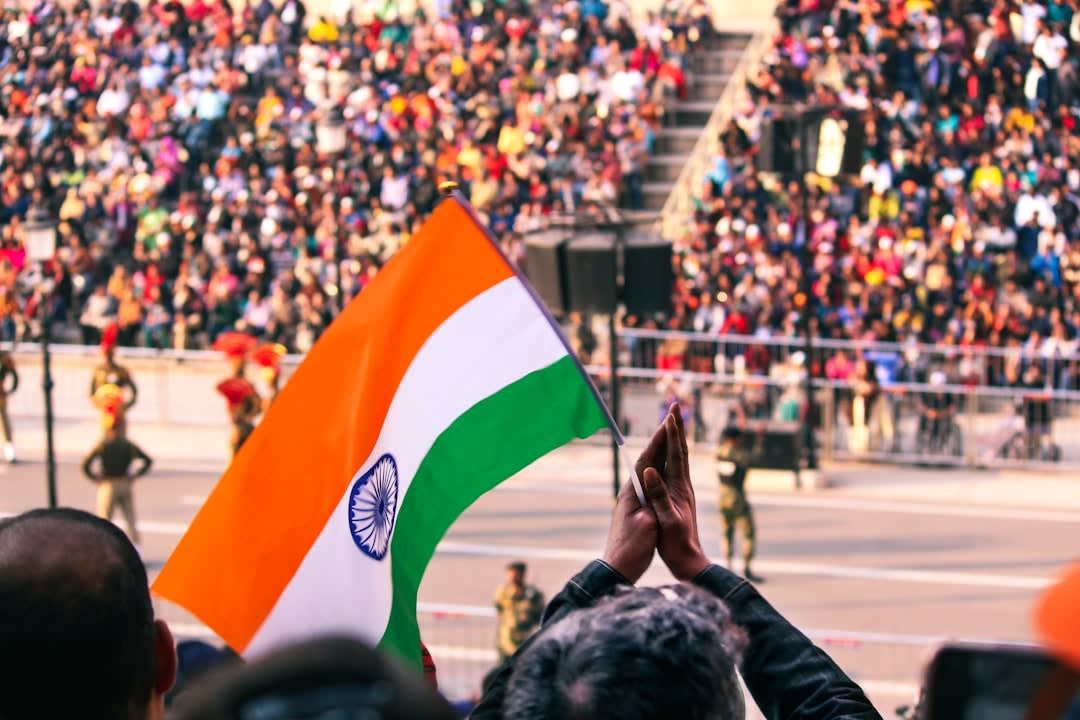
- •Jharkhand Student Hunger Strike: Echoes of Quit India Movement in Modern Protest
Jharkhand Student Hunger Strike: Echoes of Quit India Movement in Modern Protest
The Jharkhand Loktantrik Krantikari Morcha (JLKM) leader Devendra Nath Mahato joined a nine‑day hunger strike on 10 August 2026, marching to the state assembly with students demanding a CBI probe into alleged irregularities in the JPSC‑JSSC examinations. Five protesters were injured as police barricades were breached, and the state government subsequently cancelled the 14th JPSC preliminary exam after six hours of talks. The episode revives a long‑standing tradition of student‑led civil disobedience that traces its roots to the 1942 Quit India Movement.
The immediate trigger was the alleged manipulation of the 2023 and 2025 JPSC‑JSSC backlog examinations, prompting students to demand a Central Bureau of Investigation (CBI) inquiry. On 9 August 2026, the Jharkhand government announced the cancellation of the 14th JPSC preliminary test, yet the protestors insisted on an independent probe.
- ▸The protest began on 1 August 2026 with a hunger strike at Jaipal Singh Munda Stadium.
- ▸On 10 August 2026, Mahato arrived in an ambulance, joining the “Vidhan Sabha gherao” march.
- ▸Five demonstrators sustained injuries when police used water‑cannon vehicles near Jagannath Mandir.
- ▸The state’s Higher and Technical Education Minister, Sudivya Kumar, accused the opposition BJP of “hijacking” the agitation for political gain.
These facts illustrate how a specific grievance over exam integrity has escalated into a broader challenge to state authority.
Historical Roots of Civil Disobedience
India’s tradition of non‑violent protest was crystallised during the Quit India Movement, when Mahatma Gandhi called for mass civil disobedience against British rule. Gandhi’s doctrine of Civil Disobedience—refusing to obey unjust laws while accepting legal consequences—provided a moral template for later movements, including student protests in the 1970s and the anti‑corruption rallies of 2011.
- ▸In 1942, the All‑India Congress launched the Quit India programme, demanding immediate British withdrawal.
- ▸Gandhi’s emphasis on “truth‑force” (Satyagraha) inspired later generations to adopt hunger strikes as a moral lever.
- ▸The 1970s saw university students in Delhi and Calcutta employ sit‑ins and strikes to demand academic autonomy.
The Jharkhand protest’s reliance on a hunger strike and peaceful march mirrors this lineage, signalling that contemporary grievances are often framed within the moral vocabulary of historic anti‑colonial resistance.
Did You Know? The first recorded hunger strike in independent India was undertaken by activist Jatin Das in 1950, demanding the release of political prisoners—a tactic later popularised by Mahatma Gandhi’s own fasts.
Legal Framework Governing Student Grievances
India’s democratic architecture provides mechanisms for redressing administrative misconduct. The Right to Information Act 2005 empowers citizens to request official records, while the Indian Constitution guarantees equality before the law (Article 14) and protection of personal liberty (Article 21). Moreover, the National Education Policy 2020 emphasises transparent assessment and accountability in public examinations.
- ▸Under the RTI Act, students can seek copies of JPSC examination papers and evaluation sheets.
- ▸Article 21 has been interpreted by courts to include the right to a fair examination process.
- ▸The National Education Policy 2020 mandates periodic audits of state examination bodies.
These provisions create a legal avenue for students to challenge alleged irregularities, though the efficacy of such recourse depends on administrative willingness to act.
Implications for Democratic Accountability
The Jharkhand episode underscores the tension between state authority and citizen activism. While the government’s decision to cancel the exam demonstrates responsiveness, the insistence on a CBI probe reflects a deeper demand for institutional transparency. If the protest succeeds, it could set a precedent for other states to adopt independent investigations into examination scandals, reinforcing the principle that public service commissions are answerable to the populace.
- ▸A successful CBI probe would reinforce the credibility of the JPSC and restore public trust.
- ▸Continued police‑student confrontations risk eroding democratic norms if force is employed.
- ▸The episode may prompt other states to pre‑emptively reform examination procedures under the NEP 2020 guidelines.
By invoking the moral authority of historic movements like the Quit India Movement, today’s students are not merely contesting a bureaucratic lapse; they are reaffirming the democratic ethos that non‑violent dissent remains a vital instrument of accountability.
Concepts Mentioned
Constitution of India
The Constitution of India is the supreme law governing the country. It matters for UPSC as it is a key component of the syllabus. Adopted in 1949, it outlines the framework of the Indian government.
Right to Information Act, 2005
The Right to Information Act, 2005, is a law granting citizens access to government information. It promotes transparency and accountability, enabling citizens to request and obtain information from public authorities. The Act applies to all government bodies.
Civil Disobedience
Civil disobedience is the deliberate, non‑violent violation of laws or regulations to protest perceived injustice and provoke moral reflection. It has shaped democratic movements by demonstrating the power of collective conscience over coercive authority. A landmark instance was Mahatma Gandhi’s Salt March in 1930, which defied British monopoly on salt.
Quit India Movement
The Quit India Movement was a mass civil disobedience movement launched by Mahatma Gandhi in 1942, demanding immediate independence from British colonial rule. It was a significant turning point in India's struggle for freedom, with widespread protests and demonstrations taking place across the country. Over 60,000 people were arrested during the movement.
Log in to like, comment, and join the discussion.