Bihar's "Eligible for Skills" Rebrand: Compassion or Cosmetic Fix for a Failing Exam System?
Bihar Education Minister Mithilesh Tiwari announced that the term “fail” will be replaced with “eligible for skills” on Class 10 and 12 board marksheets, starting with the upcoming supplementary exams. The policy seeks to curb the stigma and mental‑health fallout associated with exam failure, aiming to boost student morale across the state. The revision will impact roughly 1.2 million students sitting for the Class 10 and 12 board examinations this year.
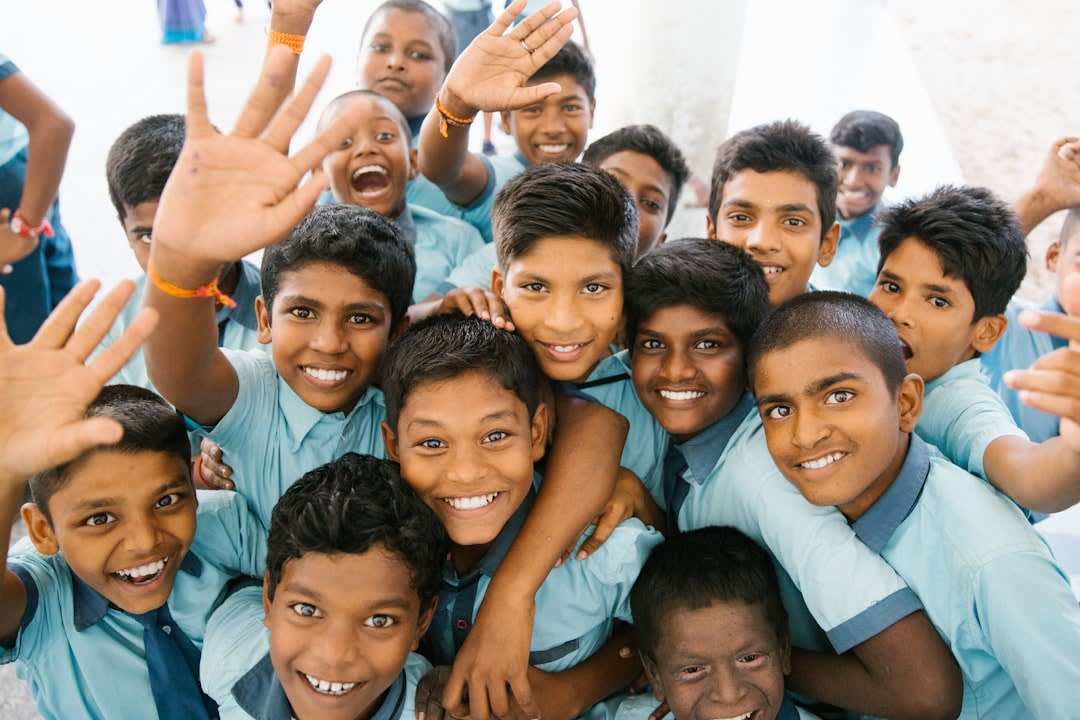
- •On August 28, 2026, Bihar Education Minister Mithilesh Tiwari announced that the word "fail" on Class 10 and 12 marksheets issued by the Bihar School Examination Board (BSEB) would be replaced with "kaushal ke liye patra" — "eligible for skills." The State Education Department will amend its rules and issue binding directives to BSEB shortly.
- •Students taking Class 10 supplementary exams will also receive one month of special classes, signalling that the government wants to recast the consequence of poor performance as a gateway rather than a dead end.
- •The move comes weeks after Class 12 aspirants in Patna's Kankerbagh told reporters that the word "fail" had driven some peers to suicide — a charge that makes the language question one of adolescent mental health, not merely semantics.
On August 28, 2026, Bihar Education Minister Mithilesh Tiwari announced that the word "fail" on Class 10 and 12 marksheets issued by the Bihar School Examination Board (BSEB) would be replaced with "kaushal ke liye patra" — "eligible for skills." The State Education Department will amend its rules and issue binding directives to BSEB shortly. Students taking Class 10 supplementary exams will also receive one month of special classes, signalling that the government wants to recast the consequence of poor performance as a gateway rather than a dead end. The move comes weeks after Class 12 aspirants in Patna's Kankerbagh told reporters that the word "fail" had driven some peers to suicide — a charge that makes the language question one of adolescent mental health, not merely semantics. ## What the Announcement Actually Changes — and What It Doesn't The rebrand alters the certificate, not the academic record. A student declared "eligible for skills" has still not cleared the examination under BSEB's existing pass criteria; they remain ineligible for promotion to the next standard, and their higher-education options do not expand unless they clear the supplementary exam. The certificate's external face changes, but the internal rules governing compartment exams, grace marks, and retention policies continue to operate as before. This matters because the announcement is being read publicly as a softening of the pass threshold itself — a reading the government has not confirmed. The Minister's wording — "an exam score does not define a child's overall talent" — is aspirational, but until BSEB publishes a revised pass-fail protocol, the substantive academic gatekeeping machinery is untouched. Students protesting alleged irregularities in the Teacher Recruitment Examination-4 (whose agitation was called off after the government agreed to conduct it in a single phase) make clear that assessment credibility, not vocabulary, remains the operative grievance. Key facts to keep in view: - The BSEB certifies over a million students annually across Class 10 and Class 12, making it one of India's largest state boards by volume. - Supplementary exams allow students to clear subjects within a defined window, but performance in them does not currently "convert" a fail into a pass on the original marksheet. - The rebrand does not affect eligibility for the National Skill Qualification Framework (NSQF), which already maps learning outcomes to skill levels independent of school certification. ## The Constitutional Floor: Why "Free and Compulsory" Does Not Guarantee Dignity Article 21-A of the Constitution, inserted by the 86th Amendment in 2002, obligates the State to provide free and compulsory education to all children aged 6 to 14. Read with Article 21 (right to life and personal liberty, as expanded by the Maneka Gandhi Judgment of 1978 to include dignity and mental wellbeing), a credible argument emerges that a schooling system which routinely inflicts psychological harm through stigmatising language has fallen short of the constitutional guarantee — not because seats are missing, but because the experience of being in those seats is degrading. Bihar's move is, in this sense, a small acknowledgement that schooling is not merely instruction; it is a relational institution. The Directive Principles, particularly Article 41 (right to work and education) and the substituted Article 51-A(k) (parental and educational duty toward children), together frame education as both a right and a protective environment. Replacing "fail" with "eligible for skills" operationalises that protective obligation, however imperfectly. :::callout Did You Know? India's National Mental Health Survey 2015-16 (conducted by NIMHANS, Bangalore) found that nearly 80% of adolescents reported academic stress as a primary concern — and suicide is the leading cause of death among 15-29-year-olds in India according to the same study. Words on a marksheet sit inside that statistical reality, not outside it. ::: ## Where the Last-Mile Delivery Actually Stands The announcement lands alongside two complementary Bihar Education Department initiatives. On August 27, the State launched "Bihar Vidya Saathi," a 24-hour one-on-one digital learning platform for Classes 9 to 12, backed by approximately 75,000 teachers providing round-the-clock academic support. On September 5 (Teachers' Day), Chief Minister Samrat Choudhary is set to launch a "Teacher Support Portal" honouring one teacher per district. These are delivery-side interventions, not merely nomenclature changes. Yet the data context is sobering. India's Gross Enrolment Ratio (GER) in higher education stood at 27.1% for the 18-23 age cohort as reported in the Economic Survey 2022-23, and Bihar's GER is well below the national average. A student who "fails" Class 10 or 12 in Bihar is statistically likely to exit the formal education system entirely. Renaming the exit point does not by itself address why so many students reach it — teacher shortages, infrastructural gaps, and the dominance of rote-learning pedagogy that the National Education Policy 2020 (NEP 2020) explicitly sought to dismantle. ## The Governance Test: Symbolic Reform vs. Structural Reform Bihar's move can be evaluated through three lenses. On dignity, it is a genuine, if overdue, step — and is consistent with the student-suicide testimonies that motivated it. On transparency, it raises a question: if BSEB can change the language on certificates overnight via departmental directive, what does that say about the consultative process governing consequential academic policy? The Right to Information Act 2005 would allow citizens to seek the file notings behind this decision, but the announcement has not been accompanied by publication of a draft rule or stakeholder consultation record. On effectiveness, the harder question is whether language change without curriculum reform produces better learning outcomes. The NEP 2020's competency-based assessment framework, if implemented in BSEB schools, would test understanding rather than memorisation — and might reduce the fail rate at its structural source. Until then, the marksheet rebrand is a compassionate gesture layered on top of an unchanged examination regime. ## What the Certificate Cannot Carry A marksheet is a credential, not a verdict on a child's life. Bihar's rebrand correctly identifies the harm in conflating the two.
Concepts Mentioned
Gross Enrolment Ratio
The Gross Enrolment Ratio (GER) measures total enrolment at a given education level as a percentage of the official school‑age population, ignoring age. It gauges a country's capacity to provide education and enables cross‑national comparisons. UNESCO recorded a primary GER of 115 % for the United Arab Emirates in 2022.
Article 51-A(k)
Article 51‑A(k) is a clause in the Indian Constitution that enshrines protecting the environment as a fundamental duty of every citizen. Its significance lies in legally obligating individuals to preserve natural resources, thereby reinforcing ecological stewardship. For instance, Indian courts have cited it to order polluters to remediate contaminated rivers.
Article 41
Article 41 of the Indian Constitution enshrines the State’s duty to secure a living wage, decent employment, and social security for all citizens. It underpins welfare policies such as the Mahatma Gandhi National Rural Employment Guarantee Scheme, which guarantees 100 days of wage work per year to rural households.
Maneka Gandhi Judgment
The Maneka Gandhi Judgment is a landmark Supreme Court decision. It established the right to travel abroad as part of personal liberty. The 1978 judgment ruled in favor of Maneka Gandhi, whose passport was revoked by the government.
Article 21
Article 21 of the Indian Constitution guarantees the right to life and personal liberty, making it a fundamental right of every citizen. This provision is significant as it protects individuals from arbitrary arrest, detention, and torture, and ensures that the state cannot deprive anyone of their life or freedom without due process. The Supreme Court has interpreted this right to include the right to a clean environment and access to healthcare.
Article 21-A
Article 21‑A, added by the 86th Amendment in 2002, guarantees every child aged six to fourteen a free and compulsory education, making education a fundamental right in India. It obliges the state to provide schools and prohibits denial of admission. The Right to Education Act of 2009 implements this mandate.
National Skill Qualification Framework
The National Skill Qualification Framework (NSQF) is a competency‑based system that groups all Indian skill qualifications into eight progressive levels aligned with industry standards. It ensures transparent assessment, sector‑wide mobility and better talent‑job matching. A Level 5 certificate in automotive mechatronics, for instance, is accepted nationwide by public and private firms.
Bihar School Examination Board
The Bihar School Examination Board (BSEB) is a state authority that designs curricula, conducts assessments and awards certificates for secondary education in Bihar, India. It standardises schooling and enables student progression to higher studies and jobs. In 2022, BSEB launched a digital result portal used by over 1.5 million candidates.
Log in to like, comment, and join the discussion.