India Slams Pakistan's Airstrikes on Afghanistan at UN Security Council
India's Permanent Representative to the UN, Ambassador Harish Parvathaneni, called out Pakistan's record of genocidal acts at the UNSC Open Debate on Wednesday. This development highlights the ongoing tensions between India and Pakistan, with India criticizing Pakistan's actions in Afghanistan. The airstrike on the Omid Addiction Treatment Hospital in Kabul resulted in 269 civilian deaths and 122 injuries, according to the UN Assistance Mission in Afghanistan.
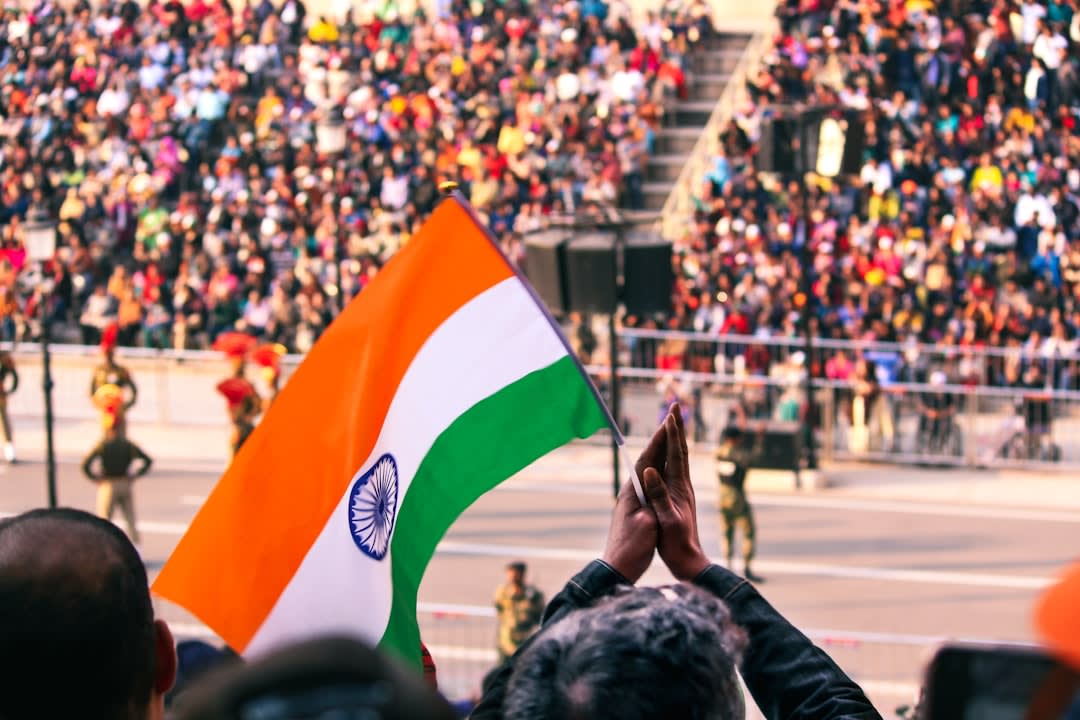
- •India's internal security landscape is complex and multifaceted, with various threats emanating from within and outside its borders.
- •The recent statement by India's Permanent Representative to the U.N.
- •Ambassador Harish Parvathaneni, highlighting Pakistan's "long-tainted" record of genocidal acts, underscores the gravity of the situation.
India's internal security landscape is complex and multifaceted, with various threats emanating from within and outside its borders. The recent statement by India's Permanent Representative to the U.N. Ambassador Harish Parvathaneni, highlighting Pakistan's "long-tainted" record of genocidal acts, underscores the gravity of the situation. This article will delve into the underlying concepts and mechanisms that contribute to India's internal security challenges, with a focus on the legal frameworks and socioeconomic roots of these threats.
Key Provisions and Legal Framework
The Unlawful Activities (Prevention) Act 1967 (UAPA) is a crucial legislation in India's arsenal against internal security threats. This Act allows for the designation of organizations as terrorist entities and provides for the prosecution of individuals involved in such activities. The National Investigation Agency Act 2008 (NIA Act) is another key legislation that enables the central government to investigate and prosecute offenses related to terrorism, cybercrime, and other serious crimes. The Armed Forces (Special Powers) Act 1958 (AFSPA) is a controversial law that grants special powers to the armed forces in disturbed areas, which has been a subject of debate and criticism.
- ▸The UAPA has been amended several times to strengthen its provisions and expand its scope.
- ▸The NIA Act has been used to investigate and prosecute several high-profile cases, including those related to terrorism and cybercrime.
- ▸The AFSPA has been criticized for its potential to be misused and has been the subject of several court challenges.
Socioeconomic Roots of Security Challenges
The socioeconomic roots of internal security challenges in India are complex and multifaceted. Poverty, unemployment, and social inequality can contribute to feelings of disillusionment and frustration, which can be exploited by extremist groups. The National Policy on Education 2020 recognizes the importance of education in promoting social cohesion and preventing radicalization. The Pradhan Mantri Jan-Dhan Yojana (PMJDY) is a financial inclusion scheme that aims to provide access to banking services for all citizens, which can help to reduce poverty and promote economic empowerment.
Did You Know? The Sarva Shiksha Abhiyan (SSA) is a flagship program of the Government of India that aims to provide universal access to elementary education, which can help to prevent radicalization and promote social cohesion.
International Dimension and Cross-Border Linkages
The international dimension of internal security threats in India is significant, with several neighboring countries, including Pakistan, being accused of sponsoring terrorism and extremism. The Simla Agreement 1972 and the Lahore Declaration 1999 are two key agreements that have shaped India's relations with Pakistan, but the relationship remains tense and volatile. The Shanghai Cooperation Organization (SCO) is a regional security organization that provides a platform for India and other member states to cooperate on counter-terrorism and other security issues.
- ▸The Simla Agreement established the Line of Control (LoC) between India and Pakistan, which has been a source of tension and conflict.
- ▸The Lahore Declaration committed India and Pakistan to reducing tensions and promoting cooperation, but the agreement has not been fully implemented.
- ▸The SCO provides a platform for India and other member states to cooperate on counter-terrorism and other security issues, but its effectiveness has been limited by regional rivalries and competing interests.
Conclusion and Way Forward
In conclusion, India's internal security challenges are complex and multifaceted, requiring a comprehensive and nuanced approach that takes into account the socioeconomic roots of these threats, as well as the international dimension and cross-border linkages. The National Counter Terrorism Centre (NCTC) is a proposed agency that would coordinate and implement counter-terrorism efforts, but its establishment has been delayed due to opposition from some states. The Intelligence Bureau (IB) is the primary intelligence agency responsible for internal security, but its capabilities and effectiveness have been questioned by some experts.
Concepts Mentioned
Lahore Declaration 1999
The Lahore Declaration 1999 is a joint statement issued by the leaders of India and Pakistan, signed on February 21, 1999, during a summit in Lahore, Pakistan. This declaration aimed to promote peace and stability in the region, particularly in the disputed Kashmir region. It marked a significant attempt at improving bilateral relations between the two nations.
Simla Agreement 1972
The Simla Agreement is a treaty between India and Pakistan. It marked the end of the Indo-Pakistani War of 1971. The agreement established the Line of Control between the two nations.
Sarva Shiksha Abhiyan
Sarva Shiksha Abhiyan is a national program aiming to universalize elementary education. It is significant for promoting education nationwide. Launched in 2001, it has improved enrollment rates.
Pradhan Mantri Jan-Dhan Yojana
Pradhan Mantri Jan-Dhan Yojana is a financial inclusion scheme. It aims to provide banking services to the poor. Over 400 million accounts have been opened under this scheme.
National Policy on Education 2020
The National Policy on Education 2020 is a comprehensive framework outlining India's vision for education, emphasizing equity, quality, and access. It aims to promote holistic development, foster critical thinking, and make education more inclusive and relevant to the needs of the 21st century. The policy also focuses on increasing the Gross Enrolment Ratio in higher education to 50% by 2035.
Armed Forces (Special Powers) Act, 1958
The Armed Forces (Special Powers) Act, 1958, is a legislation that grants special powers to the Indian Armed Forces in designated areas, allowing them to maintain law and order and counter insurgency. This act has been significant in the country's history, particularly in the northeastern states. It was first implemented in Nagaland in 1958.
National Investigation Agency Act 2008
The National Investigation Agency Act 2008 is a legislation that established the National Investigation Agency (NIA), a central agency responsible for investigating and prosecuting terrorist and cybercrime cases. This act is significant as it enables the NIA to investigate cases across state borders, promoting national security and cooperation. The NIA has successfully investigated several high-profile cases, including the 2008 Mumbai terror attacks.
Unlawful Activities (Prevention) Act, 1967
The Unlawful Activities (Prevention) Act, 1967, is a legislation aimed at preventing and punishing unlawful activities in India. It empowers the government to designate organizations and individuals as terrorist groups and impose restrictions on their activities. For instance, the Act was used to ban the Maoist Communist Centre of India in 2002, a left-wing extremist group operating in several states.
Log in to like, comment, and join the discussion.