Chambal River Faces Threats Despite High Conservation Value
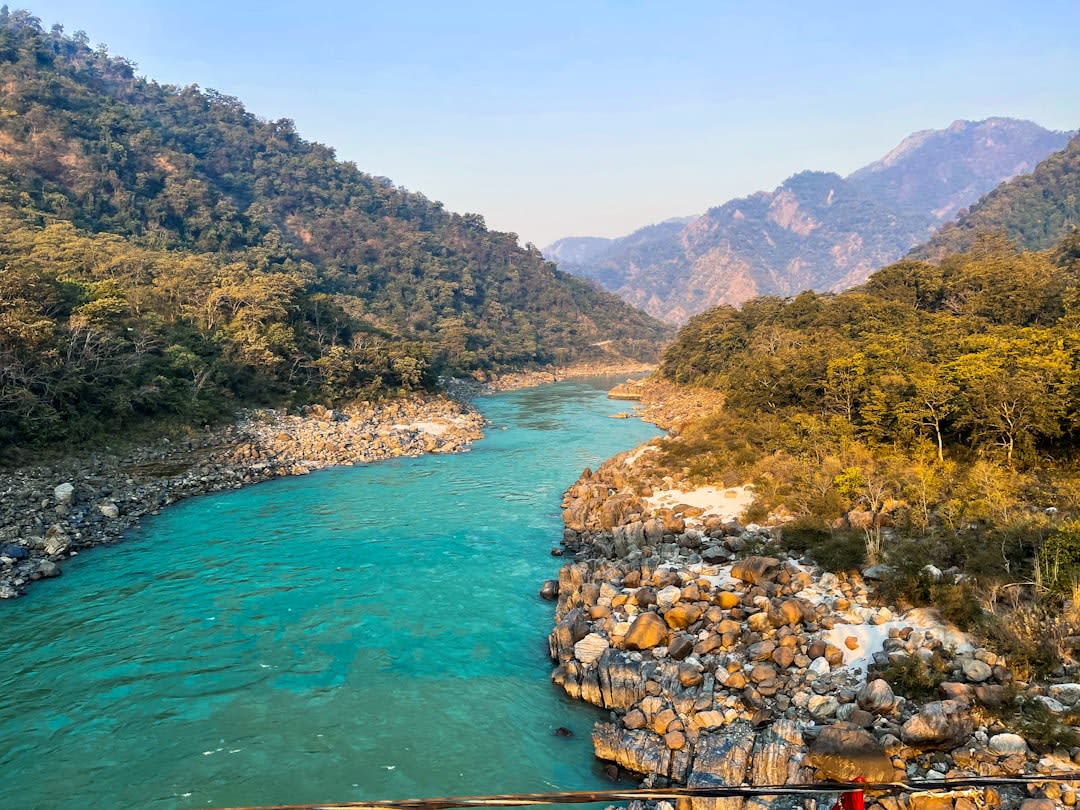
The Chambal river is facing threats to its ecosystem due to construction and human activities. The river supports over 550 species, including critically endangered animals like the gharial and the red-crowned roofed turtle, making its conservation crucial. The Chambal river's basin drains the Malwa Plateau and its tributary, the Banas River, originates in the Aravalli Range of Rajasthan, covering a significant geographical area.
- •The Indira Gandhi Canal, which flows through a small stretch of northwestern Haryana before traversing Rajasthan and ending in the Thar Desert near Gadra Road in Jaisalmer district, is India’s longest canal, at 837 kilometres.
- •It provides critical water supply to Jaisalmer and thousands of remote desert villages.
- •The canal has also reduced dependence on scarce groundwater and supports large-scale irrigation, enabling farmers to cultivate crops and significantly strengthen animal husbandry.
The Indira Gandhi Canal, which flows through a small stretch of northwestern Haryana before traversing Rajasthan and ending in the Thar Desert near Gadra Road in Jaisalmer district, is India’s longest canal, at 837 kilometres. It provides critical water supply to Jaisalmer and thousands of remote desert villages. The canal has also reduced dependence on scarce groundwater and supports large-scale irrigation, enabling farmers to cultivate crops and significantly strengthen animal husbandry. This development is closely linked to the National Water Policy, which aims to optimize water use across the country.
Geographic Features and Water Supply
The Chambal River, a tributary of the Yamuna River in central India, forms part of the Gangetic river system. It originates at Janapav, south of Mhowtown, near Manpur, Indore, on the south slope of the Vindhya Range in Madhya Pradesh. Its basin drains the Malwa Plateau, while its important tributary, the Banas River, originates in the Aravalli Range of Rajasthan. Understanding these geographic features is crucial for managing water resources effectively, as outlined in the Inter-State River Water Disputes Act 1956.
- ▸The Chambal River supports more than 550 species, including the critically endangered gharial and the red-crowned roofed turtle.
- ▸It hosts one of the most important habitats of the Gangetic dolphin, Indian skimmer, black-bellied tern, sarus crane, and a host of endangered turtle species.
- ▸The river is a vital corridor for dispersal of wildlife in an otherwise fragmented forest landscape across more than a dozen national parks and sanctuaries.
Water Scarcity and Conservation Efforts
Despite progress in water supply through canals and rivers, the problem of water scarcity persists. According to the Central Groundwater Board, as of 2022, Jaisalmer’s urban area was among seven cities in the list of 219 of Rajasthan’s 302 blocks which were categorised as over-exploited for groundwater. This situation underscores the need for sustainable water management practices, as advocated by the Jal Jeevan Mission.
Did You Know? The Indira Gandhi Canal has not only improved water availability but has also contributed to changes in local rainfall patterns, as observed by residents and supported by data showing increased rainfall in the region over the past decade.
Environmental Impact and Geopolitical Considerations
The environmental impact of human activity on India's diverse physical landscapes is a significant concern. The Environmental Impact Assessment (EIA) Notification 2006 requires assessments for certain projects to mitigate adverse environmental effects. Furthermore, geopolitical considerations, such as the sharing of water resources with neighboring countries, play a crucial role in India's water management strategies, as seen in the Indus Waters Treaty 1960.
Conclusion
In conclusion, understanding India's geography, particularly its river systems and water supply mechanisms, is essential for addressing the country's water scarcity issues and promoting sustainable development. The interplay between geographic features, water management policies, and environmental conservation efforts is complex and requires a holistic approach, as envisioned by the National Mission for Clean Ganga (NMCG).
Concepts Mentioned
National Mission for Clean Ganga
The National Mission for Clean Ganga is a government initiative to restore the Ganga River's purity. It aims to improve water quality and ecosystem health. The mission has led to the creation of sewage treatment infrastructure.
Indus Waters Treaty 1960
The Indus Waters Treaty is a water-sharing agreement between India and Pakistan. It signifies a crucial accord on water distribution, ensuring cooperation. The treaty allocates the Indus River's waters.
Environmental Impact Assessment (EIA) Notification 2006
Environmental Impact Assessment Notification 2006 is a regulation requiring assessment of projects' environmental effects. It is significant for sustainable development. The notification applies to various projects, including mining and construction.
Jal Jeevan Mission
Jal Jeevan Mission is a government initiative to provide tap water to every household. It aims to improve water supply and sanitation. Launched in 2019, it targets 18.66 crore rural households.
Inter-State River Water Disputes Act 1956
The Inter-State River Water Disputes Act 1956 is a legislation aimed at resolving disputes between states over the sharing of river waters. It has significant implications for water management and interstate relations in India. For instance, the act was used to resolve the long-standing dispute between the states of Maharashtra and Gujarat over the sharing of the Narmada River waters.
National Water Policy 2012
The National Water Policy 2012 is a comprehensive framework for the management and conservation of India's water resources. It aims to ensure equitable distribution, efficient use, and sustainable development of water resources, thereby addressing the country's growing water scarcity issues. The policy emphasizes the importance of water conservation through measures like rainwater harvesting.
Log in to like, comment, and join the discussion.