India's Longest Canal Supports Irrigation in Rajasthan's Desert Villages
Today, reports highlighted the critical role of the Indira Gandhi Canal in supporting irrigation in Rajasthan's desert villages. The canal's impact is significant as it has enabled agriculture to flourish in water-scarce regions and reduced dependence on groundwater. The 837-kilometer-long canal provides water to thousands of remote villages, including Jaisalmer district, and has led to increased rainfall in the region.
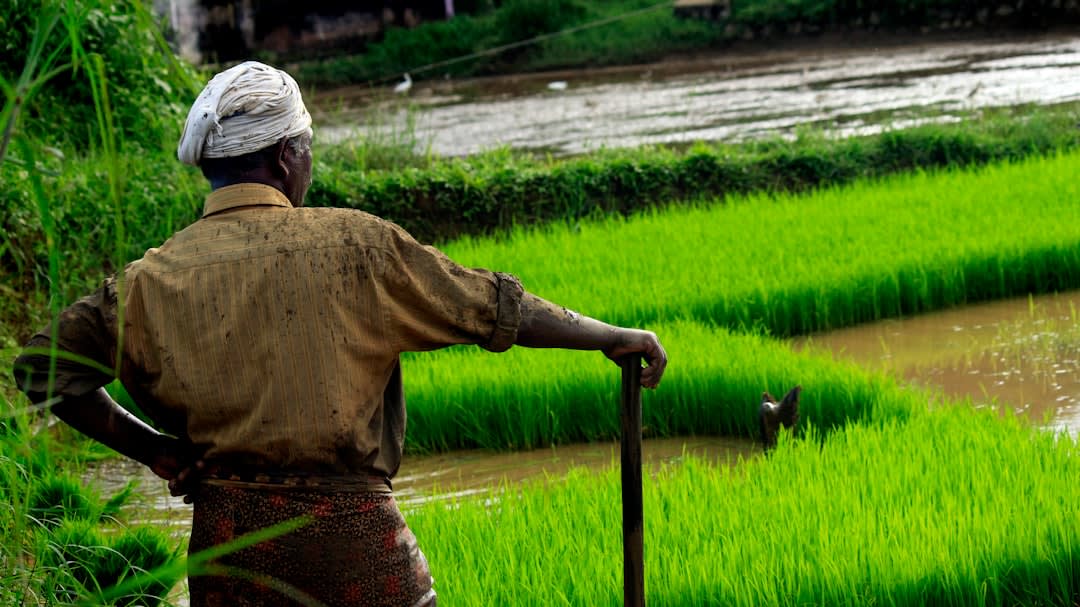
- •The Indira Gandhi Canal, which flows through a small stretch of northwestern Haryana before traversing Rajasthan and ending in the Thar Desert near Gadra Road in Jaisalmer district, is India’s longest canal, at 837 kilometres.
- •It provides critical water supply to Jaisalmer and thousands of remote desert villages.
- •The canal has also reduced dependence on scarce groundwater and supports large-scale irrigation, enabling farmers to cultivate crops and significantly strengthen animal husbandry.
The Indira Gandhi Canal, which flows through a small stretch of northwestern Haryana before traversing Rajasthan and ending in the Thar Desert near Gadra Road in Jaisalmer district, is India’s longest canal, at 837 kilometres. It provides critical water supply to Jaisalmer and thousands of remote desert villages. The canal has also reduced dependence on scarce groundwater and supports large-scale irrigation, enabling farmers to cultivate crops and significantly strengthen animal husbandry. This development is closely linked to the National Water Policy, which aims to optimize water use and allocation across the country.
Impact on Local Ecosystems
The introduction of the Indira Gandhi Canal has led to a noticeable increase in rainfall in the region, according to local residents. This shift is attributed to the increased availability of water and vegetation the canal has facilitated. The canal's presence has transformed the local ecosystem, allowing for the growth of unique trees and vegetation, such as those found along the banks of the canal at Mohangarh in Jaisalmer district. This transformation is a testament to the potential of human intervention in altering and improving environmental conditions, as outlined in the Environmental Protection Act 1986.
Water Scarcity and Groundwater Management
Despite the progress made, the problem of water scarcity persists in the region. According to the Central Groundwater Board, as of 2022, Jaisalmer’s urban area was among seven cities in the list of 219 of Rajasthan’s 302 blocks which were categorised as over-exploited for groundwater. This highlights the need for sustainable groundwater management practices, as advocated by the Ground Water (Regulation and Control of Development and Management) Draft Framework. Effective management of groundwater resources is crucial for ensuring the long-term viability of the Indira Gandhi Canal and the ecosystems it supports.
Did You Know? The Indira Gandhi Canal has not only improved water supply but has also contributed to an increase in local biodiversity, with the canal's water supporting a variety of flora and fauna in the arid regions of Rajasthan.
Economic and Social Implications
The Indira Gandhi Canal has significant economic and social implications for the regions it serves. By enabling large-scale irrigation, it has strengthened the local economy, particularly in the agricultural sector. This, in turn, has supported the livelihoods of thousands of farmers and their families, contributing to the overall development of the area. The canal's impact is also closely tied to the Pradhan Mantri Krishi Sinchayee Yojana (PMKSY), which aims to enhance water use efficiency and improve water management practices in agriculture.
Conclusion and Future Directions
The Indira Gandhi Canal is a prime example of how infrastructure development can have a profound impact on local ecosystems and economies. As India continues to grapple with issues of water scarcity and sustainable development, the lessons from the Indira Gandhi Canal can inform future projects and policies, such as those outlined in the Jal Jeevan Mission. By integrating insights from successful initiatives like the Indira Gandhi Canal into broader policy frameworks, such as the National Mission for Sustainable Agriculture (NMSA), India can work towards achieving more sustainable and equitable water management practices.
Concepts Mentioned
National Mission for Sustainable Agriculture (NMSA)
The National Mission for Sustainable Agriculture is a government initiative promoting sustainable farming practices. It aims to improve agricultural productivity and livelihoods. Launched in 2014, it supports climate-resilient agriculture.
Jal Jeevan Mission
Jal Jeevan Mission is a government initiative to provide tap water to every household. It aims to improve water supply and sanitation. Launched in 2019, it targets 18.66 crore rural households.
Pradhan Mantri Krishi Sinchayee Yojana (PMKSY)
Pradhan Mantri Krishi Sinchayee Yojana is a government scheme to improve irrigation. It aims to enhance water use efficiency and increase crop yields. Launched in 2015, it has helped farmers nationwide.
Ground Water (Regulation and Control of Development and Management) Draft Framework
The Ground Water Draft Framework regulates and controls groundwater development and management. It is significant for conserving this vital resource. India's groundwater is being depleted rapidly, with 70% of drinking water sourced from it.
Environmental Protection Act, 1986
The Environmental Protection Act, 1986, is a landmark legislation in India that aims to protect and improve the environment by preventing and controlling pollution. It has significant implications for industries, government agencies, and citizens, promoting sustainable development and conservation of natural resources. The Act led to the establishment of the National Environment Tribunal to handle environmental disputes.
National Water Policy 2012
The National Water Policy 2012 is a comprehensive framework for the management and conservation of India's water resources. It aims to ensure equitable distribution, efficient use, and sustainable development of water resources, thereby addressing the country's growing water scarcity issues. The policy emphasizes the importance of water conservation through measures like rainwater harvesting.
Log in to like, comment, and join the discussion.