Project Overview
The Indian government cleared the draft master plan for the Great Nicobar Island Development Area, a Rs 90,000‑crore project covering 166 sq km. The plan envisions a trans‑shipment port, integrated township and civil‑military infrastructure on the archipelago’s southern tip, positioning India as a strategic hub in the Indian Ocean. If implemented, the project would affect the world’s only Shompen community of fewer than 300 people and threaten habitats of endemic species such as the Nicobar megapode and long‑tailed macaque.
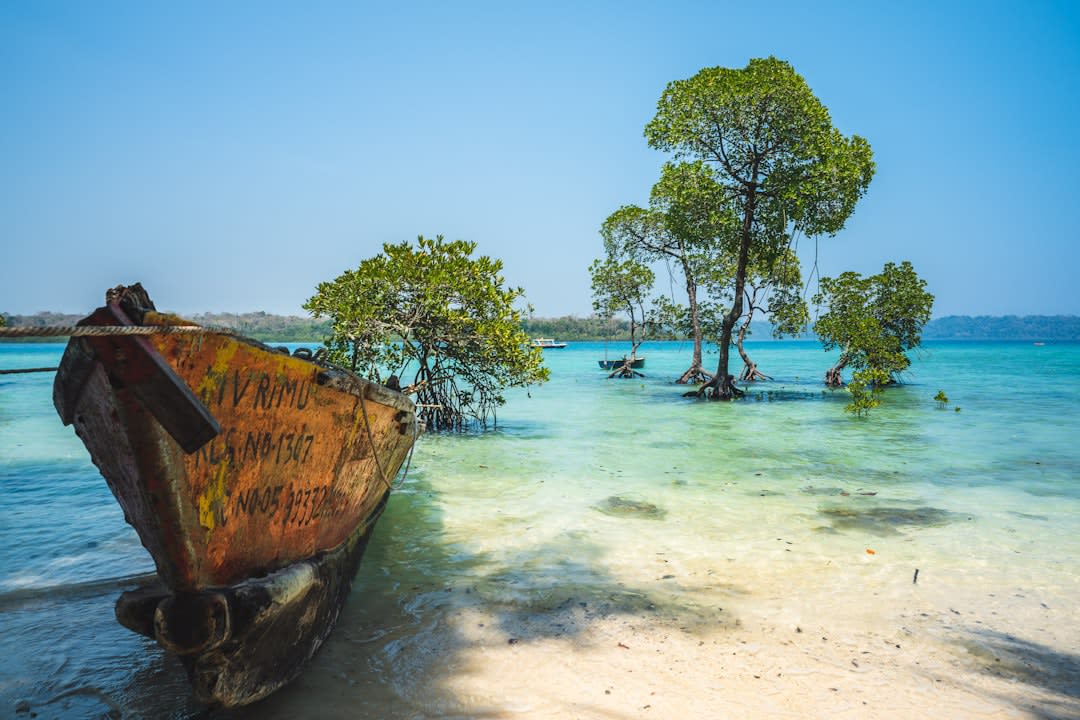
- •Great Nicobar Island Project ₹90,000 crore: Development‑vs‑Conservation Dilemma
Great Nicobar Island Project ₹90,000 crore: Development‑vs‑Conservation Dilemma
The Centre has cleared a draft master plan for a 166 sq km “Great Nicobar Island Development Area” that envisions an international container‑trans‑shipment port, a civil‑military airport, a power plant, a luxury‑tourism township and related infrastructure at an estimated cost of ₹90,000 crore. The proposal also earmarks 73 sq km of the island as tribal reserve, raising urgent questions about ecological integrity, indigenous rights and compliance with national and international environmental norms.
The plan, tabled for implementation by 2047, seeks to transform the southern tip of Great Nicobar Island—India’s southernmost point—into a strategic logistics hub. The project’s components include a deep‑water port capable of handling 1 million TEU annually, a 2,500‑metre runway, a 150 MW power plant, and a mixed‑use township with 5,000 residential units and a luxury‑tourism zone.
- ▸Total outlay: ₹90,000 crore (≈ US$1.1 billion).
- ▸Land area: 166 sq km, of which 73 sq km is designated as tribal reserve.
- ▸Key infrastructure: container‑port, civil‑military airport, power plant, tourism township.
- ▸Strategic rationale: proximity to the Strait of Malacca and the Ten Degree Channel separating the Andaman and Nicobar groups.
The plan assumes that the port will generate annual revenues of ₹12 billion and create 12,000 direct jobs, while the township is projected to house 20,000 residents, including defence personnel and civilians.
Ecological Significance
Great Nicobar Island sits on the southern edge of the Indo‑Australian Plate, a tectonic boundary that fuels both seismic activity and the region’s unique biodiversity. The island hosts the world’s only surviving population of the Shompen tribe and a suite of endemic fauna, including the leatherback sea turtle, long‑tailed macaque, coconut crab and Nicobar megapode.
- ▸Leatherback sea turtle: IUCN “Critically Endangered”.
- ▸Long‑tailed macaque: IUCN “Vulnerable”.
- ▸Coconut crab: IUCN “Vulnerable”.
- ▸Nicobar megapode: IUCN “Near Threatened”.
These species are protected under the CITES framework, and the island’s mangroves and coastal wetlands qualify as a Ramsar site under the Ramsar Convention. The area also contributes to India’s commitments under the CBD and the UNFCCC to preserve biodiversity and mitigate climate change impacts.
Did You Know? The Great Nicobar rainforests store an estimated 2.5 million tonnes of carbon, equivalent to the annual emissions of a small Indian state, underscoring the island’s role in climate mitigation.
Tribal Rights and Conservation
The Shompen, numbering fewer than 300 individuals, are a hunter‑gatherer community with limited contact with the outside world. The Nicobarese, a larger Austro‑Asian group, rely on subsistence fishing and shifting cultivation. Both communities are entitled to protection under the National Biodiversity Act 2002, which mandates prior informed consent for projects affecting their traditional knowledge and resources.
- ▸Tribal reserve: 73 sq km set aside for Shompen and Nicobarese use.
- ▸Consent requirement: “Free, Prior and Informed Consent” (FPIC) as per national law.
- ▸Livelihood impact: projected loss of 45 % of traditional foraging zones if the port expands into mangrove areas.
The draft plan’s environmental clearance hinges on an Environmental Impact Assessment that must quantify habitat loss, displacement risk, and mitigation measures. To date, the EIA report has not been publicly released, prompting civil‑society groups to demand greater transparency.
Legal and Policy Framework
India’s environmental governance rests on a hierarchy of statutes and international obligations. The project must satisfy the provisions of the Environmental Impact Assessment Act, the Forest Conservation Act, and the Wildlife Protection Act, each of which imposes distinct clearance pathways. Moreover, the island’s status as a biodiversity hotspot obliges the Centre to honour its commitments under the Ramsar Convention and the CITES appendices.
- ▸Forest Clearance: required for any land‑use change exceeding 0.5 sq km.
- ▸Wildlife Clearance: mandatory for projects affecting species listed in Schedule I of the Wildlife Protection Act.
- ▸International compliance: periodic reporting to the CBD’s National Biodiversity Strategy and Action Plan (NBSAP).
Non‑compliance could trigger legal challenges, as seen in the 2006 C‑M Mehta v. Union of India case, where the Supreme Court emphasized the “precautionary principle” in environmental matters.
Trade‑offs and Way Forward
Balancing strategic imperatives with ecological stewardship demands a nuanced approach. While the port promises economic dividends and enhanced maritime security, the irreversible loss of critical habitats could undermine India’s climate targets and erode indigenous cultures. Mitigation options include relocating the port to a less sensitive coastline, adopting green port technologies, and strengthening community‑led conservation programmes.
- ▸Alternative site analysis: a 2024 feasibility study identified three lower‑impact coastal zones within the island’s periphery.
- ▸Green port measures: shore‑power provision, waste‑to‑energy conversion, and mangrove restoration offsetting 30 % of projected carbon loss.
- ▸Community benefit‑sharing: a proposed 5 % revenue share for tribal development funds, subject to FPIC validation.
The ultimate test will be whether the project can meet the “
Tags
Concepts Mentioned
Environment Impact Assessment Notification 2006
Environment Impact Assessment Notification 2006 is a regulatory measure. It requires assessing projects' environmental effects. Notably, it applies to 39 categories of projects.
National Biodiversity Act 2002
The National Biodiversity Act, 2002 is an Indian legislation that establishes a framework for the conservation, sustainable use and equitable sharing of the country's biological resources. It created the National Biodiversity Authority to regulate access to genetic material and benefit‑sharing agreements. For example, the Act enabled the licensing of neem oil extraction from native trees, generating royalties for local communities.
UNFCCC
The United Nations Framework Convention on Climate Change (UNFCCC) is an international treaty adopted in 1992 to coordinate global efforts to combat climate change. It provides the legal basis for negotiations such as the Paris Agreement, which in 2015 set a goal to limit warming to well below 2 °C. As of 2024, 197 parties have ratified the convention.
CBD
CBD (cannabidiol) is a non‑psychoactive compound extracted from the cannabis plant that interacts with the body’s endocannabinoid system. It has gained prominence for its potential therapeutic uses, such as reducing seizure frequency in certain forms of epilepsy, leading to FDA‑approved medication Epidiolex.
Ramsar Convention
The Ramsar Convention is an international treaty aimed at conserving and managing wetlands worldwide. Adopted in 1971, it recognizes the importance of these ecosystems in maintaining biodiversity, regulating water cycles, and supporting human livelihoods. The convention has over 170 member countries, including India, which designated its first wetland site, the Keoladeo National Park, as a Ramsar site in 1981.
CITES
CITES (the Convention on International Trade in Endangered Species of Wild Fauna and Flora) is a treaty that regulates cross‑border commerce in threatened plants and animals to prevent extinction. It unites 184 parties that list species in three appendices, allowing trade only with strict permits. For example, African ivory is in Appendix I, banning commercial export.
Log in to like, comment, and join the discussion.