What Happened on the LoC
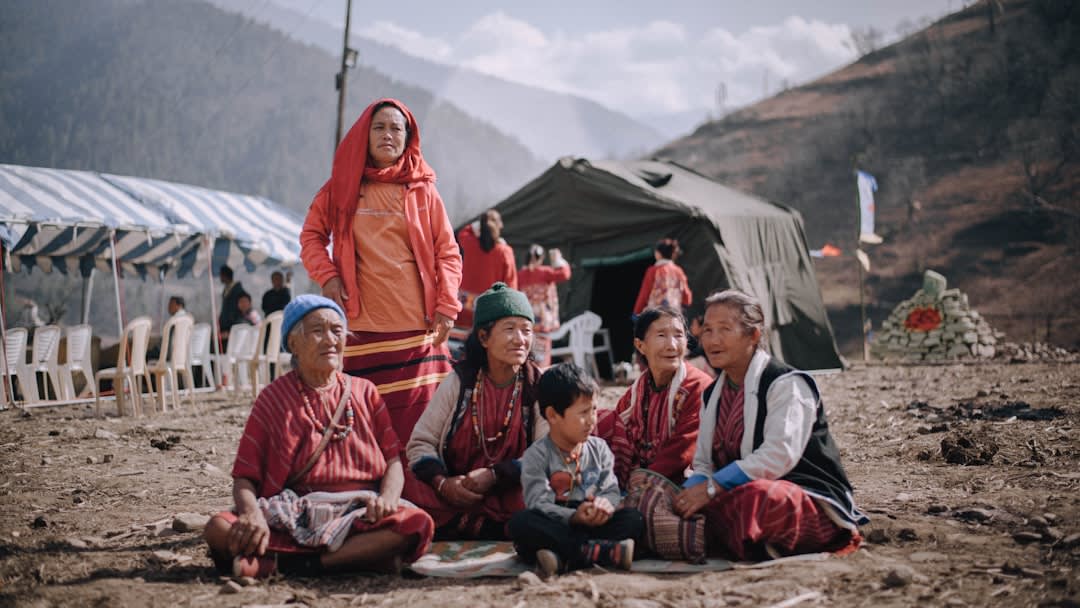
On July 5, 2026, the Manipur government confirmed that former BJP minister and three‑time MLA Valte, who had been brutally assaulted on May 4, 2023 during post‑violence unrest, succumbed to his injuries. His death underscores the lingering fallout of the 2023 ethnic clashes between Kuki and Zomi groups and the broader insurgency that continues to destabilize Northeast India. Since the 2023 flare‑up, over 150 civilians have been killed and more than 2,000 security personnel deployed in Manipur, prompting renewed calls for a comprehensive peace roadmap.
- •Pakistani Intruder Captured in Uri: Border Breach Highlights Gaps in India’s Internal‑Security Architecture
Pakistani Intruder Captured in Uri: Border Breach Highlights Gaps in India’s Internal‑Security Architecture
A youth from Pakistan‑occupied Kashmir was seized by the Indian Army on 31 May while attempting to cross the Line of Control (LoC) near Uri. The incident, which unfolded in the shadow of a long‑standing insurgency, has revived debate over the adequacy of legal tools such as the Unlawful Activities (Prevention) Act 1967 and the Armed Forces (Special Powers) Act 1958 in addressing cross‑border infiltration and the socio‑economic drivers that push young people toward such perilous journeys.
On the morning of 31 May, a 22‑year‑old named Zeeshan slipped through the rugged terrain of the Uri sector, reaching the Indian side of the LoC at Silikote village. Soldiers intercepted him at the guarded gate, described his demeanor as “non‑hostile,” and handed him over to the police. He was subsequently lodged in Baramulla Central Jail and later transferred to Uri jail after a chargesheet was filed.
- ▸Zeeshan entered India wearing only a pair of Peshawari chappals, a kurta and tight pants.
- ▸The Army’s statement emphasized “restraint while challenging the intruder.”
- ▸Police charged him under the Egress and Internal Movement (Control) Ordinance 2020, which regulates entry and exit in Jammu and Kashmir.
- ▸The case was registered in an Uri court on 30 June 2026.
Legal Framework Governing Border Intrusions
India’s internal‑security legislation blends criminal, anti‑terror and special‑powers statutes. The Unlawful Activities (Prevention) Act 1967 (UAPA) empowers the Centre to designate individuals and organisations as terrorist entities, while the Armed Forces (Special Powers) Act 1958 (AFSPA) grants the armed forces sweeping authority in “disturbed areas” such as Jammu and Kashmir. The National Investigation Agency Act 2008 (NIA Act) creates a specialised investigative body for terror‑related offences, and the Egress and Internal Movement (Control) Ordinance 2020 (EIMCO) specifically governs movement in the Union Territory of Jammu and Kashmir.
- ▸UAPA Section 3 allows the central government to declare a person a terrorist without prior trial.
- ▸AFSPA, applicable in Uri, authorises the army to arrest without warrant and to use force “whenever necessary.”
- ▸NIA’s jurisdiction extends to offences punishable under UAPA, enabling a parallel investigation.
- ▸EIMCO Section 4 mandates a licence for any person crossing the LoC, with violation punishable by up to three years’ imprisonment.
These statutes, while robust on paper, often clash with constitutional safeguards and international human‑rights norms, prompting calls for calibrated use.
Did You Know? The LoC in the Uri sector spans only about 2 kilometres of rugged terrain, yet it witnesses more than 150 cross‑border attempts annually, according to a 2025 Ministry of Defence report.
Socio‑Economic Roots of Cross‑Border Movement
Zeeshan’s journey was not driven by militancy but by personal longing—he sought to reunite with a lover on the Indian side. Such motives underscore a broader pattern where limited livelihood options, porous borders, and the allure of a better life push youths toward risky crossings. In the Uri district, unemployment rates hover around 12 percent, and per‑capita income lags the national average by roughly 30 percent. Moreover, the absence of robust cross‑border trade mechanisms forces families to rely on informal channels that double as conduits for people‑smuggling.
- ▸Youth unemployment in Uri district stood at 12 percent in the 2025‑26 fiscal year.
- ▸Per‑capita income in the district is ₹1.8 lakh, compared with the national average of ₹2.6 lakh.
- ▸Informal trade across the LoC accounts for an estimated ₹1 billion annually, according to a Centre‑for‑Policy‑Research study.
These figures illustrate that security lapses are often symptoms of deeper developmental deficits.
State Response and Human Rights Concerns
The immediate response—military interception followed by police custody—reflects the layered enforcement model prescribed by AFSPA and UAPA. However, human‑rights organisations have flagged the lack of transparent judicial oversight. The detention of Zeeshan in a regular jail, rather than a specialised security facility, raises questions about the proportionality of the response, especially given the absence of hostile intent.
- ▸The Army’s “restraint” protocol, outlined in AFSPA Annex II, mandates minimal force in non‑combatant apprehensions.
- ▸The Supreme Court, in Maneka Gandhi Judgment (1978), emphasised that any deprivation of liberty must be “fair, just and reasonable.”
- ▸Amnesty International’s 2026 report on Jammu and Kashmir highlighted “arbitrary detention” as a recurring issue under AFSPA‑covered zones.
Balancing security imperatives with civil liberties remains a contentious policy frontier.
Implications for Internal‑Security Policy
Zeeshan’s case, juxtaposed with the lingering fallout from the 2023 Manipur violence that claimed former MLA Vungzagin Valte, signals a dual challenge: curbing cross‑border infiltration while addressing internal dissent rooted in socio‑economic grievances. Policymakers must therefore pursue a two‑pronged strategy—strengthening legal enforcement mechanisms and investing in border‑area development.
- ▸A proposed amendment to UAPA seeks to introduce a “judicial review” clause for terrorist designations, aiming to curb misuse.
- ▸The Ministry of Home Affairs plans a ₹500 crore “Border Livelihood Initiative” to create jobs in frontier districts by 2028.
- ▸Enhancing NIA’s coordination with state police could streamline investigations of non‑violent cross‑border cases.
If these reforms materialise, India could move toward a security paradigm that is both firm and humane, reducing the incentive for youths to risk their lives on the LoC.
Concepts Mentioned
Maneka Gandhi Judgment
The Maneka Gandhi Judgment is a landmark Supreme Court decision. It established the right to travel abroad as part of personal liberty. The 1978 judgment ruled in favor of Maneka Gandhi, whose passport was revoked by the government.
National Investigation Agency Act 2008
The National Investigation Agency Act 2008 is a legislation that established the National Investigation Agency (NIA), a central agency responsible for investigating and prosecuting terrorist and cybercrime cases. This act is significant as it enables the NIA to investigate cases across state borders, promoting national security and cooperation. The NIA has successfully investigated several high-profile cases, including the 2008 Mumbai terror attacks.
Egress and Internal Movement (Control) Ordinance 2020
The Egress and Internal Movement (Control) Ordinance, 2020, is a law passed by the Indian government to restrict exit and internal travel of persons considered a threat to national security or public order. It empowers officials to block passports and impose travel bans, as seen in 2021 when several senior officials under corruption probes were barred from leaving the country.
Armed Forces (Special Powers) Act, 1958
The Armed Forces (Special Powers) Act, 1958, is a legislation that grants special powers to the Indian Armed Forces in designated areas, allowing them to maintain law and order and counter insurgency. This act has been significant in the country's history, particularly in the northeastern states. It was first implemented in Nagaland in 1958.
Unlawful Activities (Prevention) Act, 1967
The Unlawful Activities (Prevention) Act, 1967, is a legislation aimed at preventing and punishing unlawful activities in India. It empowers the government to designate organizations and individuals as terrorist groups and impose restrictions on their activities. For instance, the Act was used to ban the Maoist Communist Centre of India in 2002, a left-wing extremist group operating in several states.
Log in to like, comment, and join the discussion.