The Flagship Launch – What Happened
Prime Minister Narendra Modi announced that he will flag off India’s first hydrogen‑powered passenger train in Jind, Haryana on July 17. The launch marks a major step toward green‑technology adoption in Indian Railways, joining a handful of countries experimenting with hydrogen propulsion. The train set, comprising eight passenger coaches and two power cars, can deliver 2,400 kW of power and carry 682 passengers at a maximum speed of 75 km/h.
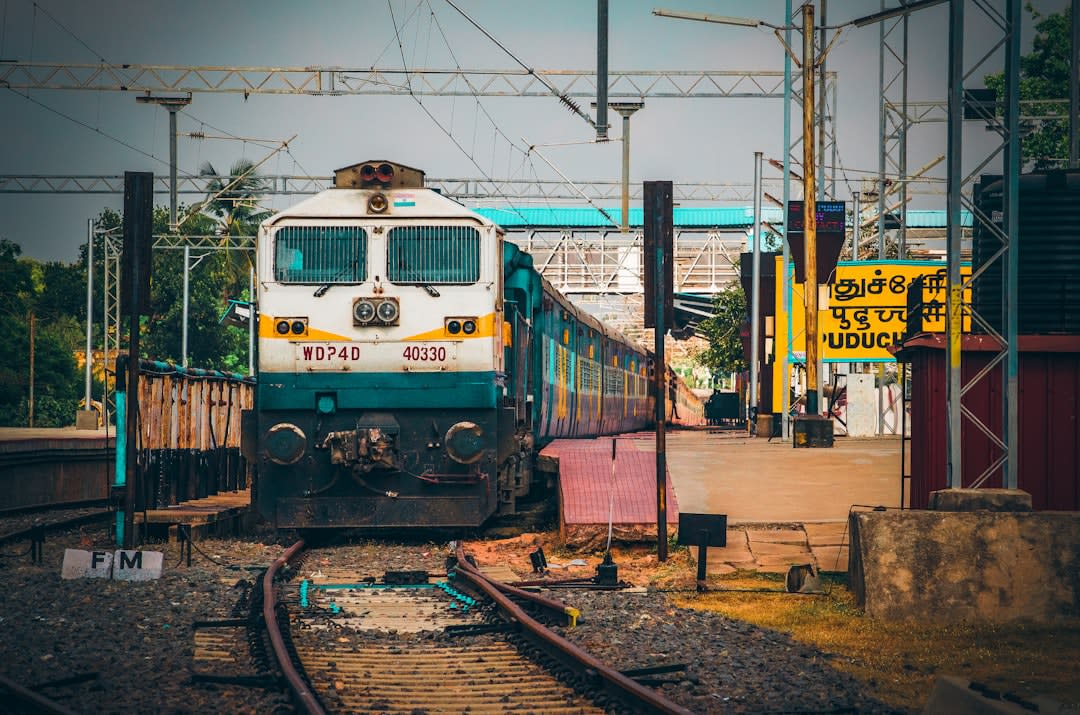
- •Hydrogen‑Powered Train Flagged Off in Haryana: Implications for India's Rail Modernisation
Hydrogen‑Powered Train Flagged Off in Haryana: Implications for India's Rail Modernisation
Prime Minister Narendra Modi will flag off India’s first hydrogen‑powered train on 17 July at Jind, Haryana. The eight‑coach set, equipped with two 2400 kW power cars, will run the 89 km Jind‑Sonipat stretch at a top speed of 75 km/h, carrying up to 682 passengers per trip. Its debut marks a shift from diesel‑electric traction toward zero‑emission propulsion on Indian Railways’ expanding network.
The inaugural run will make two round trips daily, covering 356 km and consuming an estimated 300 kg of hydrogen.
- ▸The train comprises eight passenger cars and two driving power cars.
- ▸Each power car delivers 2400 kW (3200 hp), comparable to conventional diesel‑electric multiple units.
- ▸Maximum operational speed is capped at 75 km/h on the Jind‑Sonipat corridor.
- ▸Hydrogen consumption is projected at 300 kg for the full 356 km daily schedule.
How Hydrogen Propulsion Works
The train replaces diesel engines with a hybrid system that couples a Hydrogen fuel cell with a lithium‑ferro‑phosphate battery. The fuel cell provides a steady 115 kW output, while the battery supplies an additional 185 kW, together forming a 300 kW power pack. Four such packs are installed, delivering a total of 1200 kW; the twin‑power‑car configuration doubles this to 2400 kW.
- ▸Fuel cells generate electricity by combining hydrogen with ambient oxygen, emitting only water vapour.
- ▸Batteries smooth out transient power demands during acceleration and braking.
- ▸Hydrogen is stored at high pressure (≈ 350 bar) in specialised cylinders within the power cars.
- ▸The system’s modular design allows retrofitting onto existing diesel‑electric rakes.
Railway Modernisation Framework
Railway development falls under the Union’s exclusive legislative competence as per Article 246 of the Constitution, which places transport in the Union List. Leveraging this authority, the Ministry of Railways has launched a suite of safety‑enhancement projects, including automatic block signalling, double‑line construction, and the indigenously developed train‑protection system Kavach.
- ▸The central government can enact nationwide standards for signalling and track upgrades.
- ▸Automatic block signalling divides tracks into sections, permitting only one train per block to prevent collisions.
- ▸Double‑line projects aim to segregate up‑ and down‑traffic, reducing headway times.
- ▸Kavach uses GPS and radio communication to enforce speed limits and halt trains that breach signals.
Safety Challenges – Cable Cuts and Signal Failures
Ongoing infrastructure works have triggered frequent cable cuts, leading to signal disruptions across the network. The Ministry issued an alert to all Zonal Railways’ general managers, urging heightened vigilance during construction activities.
- ▸Cable cuts have been reported repeatedly, jeopardising signal integrity.
- ▸The alert emphasises pre‑emptive checks before trenching or laying new utilities.
- ▸Failure to address these cuts could precipitate catastrophic accidents.
Did You Know? The world’s first hydrogen passenger train, the Coradia iLint by Alstom, entered service in Germany in 2018, operating on a 42 km regional line before being redeployed to longer routes.
Economic and Environmental Impact
Hydrogen propulsion eliminates the combustion of diesel, cutting CO₂ emissions by roughly 150 kg per 100 km compared with conventional diesel‑electric units. With India’s reliance on imported diesel, the shift also reduces foreign exchange outflows.
- ▸The train’s 300 kg hydrogen requirement translates to an estimated 45 % lower carbon footprint than diesel for the same distance.
- ▸Hydrogen can be produced domestically via electrolysis powered by renewable energy, enhancing energy security.
- ▸Operating costs are projected to fall as hydrogen prices decline with scaling of green‑hydrogen plants.
Way Forward – Scaling Up Hydrogen and Digital Safety
Realising a nationwide hydrogen‑train fleet will demand dedicated refuelling infrastructure, robust supply chains, and policy incentives. The Ministry is expected to integrate hydrogen production under the National Hydrogen Mission, while expanding digital safety layers through real‑time monitoring and predictive maintenance.
- ▸Establishing hydrogen stations at strategic junctions will curtail range anxiety.
- ▸Investment in high‑pressure storage and transport pipelines is essential for cost‑effective scaling.
- ▸Enhancing Automatic block signalling with AI‑driven analytics can pre‑empt cable‑cut incidents.
The Jind‑Sonipat launch is a pilot that could catalyse a broader transition to green rail, aligning India’s transport sector with its climate commitments and fiscal prudence.
Concepts Mentioned
Automatic block signalling
Automatic block signalling is a railway safety system that uses track circuits or axle counters to detect train presence and automatically set signals to protect a fixed block section. It removes manual control, boosting line capacity and lowering collision risk. The British West Coast Main Line adopted it in the 1970s, enabling three‑minute headways.
Alstom
Alstom is a French multinational that designs, builds and services rail transport equipment and systems, including high‑speed trains, metros and signalling solutions. It is a key player in global sustainable mobility, supplying over 12,000 trains to more than 60 countries. Notably, Alstom produced the TGV, France’s iconic high‑speed train.
Coradia iLint
Coradia iLint is a hydrogen‑fuel‑cell powered passenger train developed by Alstom, representing the world’s first zero‑emission main‑line railway vehicle. Its significance lies in demonstrating that hydrogen can replace diesel on non‑electrified routes, cutting greenhouse‑gas emissions and noise. The first units entered service in 2018 on Germany’s Lower Saxony line between Celle and Hamburg.
Kavach
Kavach is an indigenous Automatic Train Protection system developed by Indian Railways to prevent collisions and signal passing at danger. It automatically applies brakes when a train exceeds speed limits or disregards a signal, thereby enhancing safety. By March 2024, over 5,000 km of track had been equipped, cutting rear‑end crashes by roughly 30 %.
Article 246
Article 246 of the Indian Constitution delineates the division of legislative authority between the Union and the States. It establishes the Union List, State List and Concurrent List, specifying which body may enact laws on particular subjects. For example, defence is a Union subject, while police is a State subject.
Hydrogen fuel cell
A hydrogen fuel cell is an electrochemical device that converts hydrogen and oxygen into electricity, water, and heat, without combustion. It offers high efficiency and zero‑emission power for applications ranging from vehicles to stationary backup systems. For example, the Toyota Mirai uses a fuel‑cell stack to deliver about 150 kW of power.
Log in to like, comment, and join the discussion.