Kerala's Power Crisis: How Energy Security Challenges Threaten the State's AI-Driven Future
Today, Kerala Chief Minister V.D. Satheesan disclosed that the state is seeking emergency electricity supplies from eight neighboring states and multiple power agencies to address a severe monsoon‑season power shortfall. The move accompanies a pledge to roll out a revised power policy and both short‑ and long‑term plans aimed at securing state‑level energy security while expanding renewable generation backed by storage. The state’s power demand rose by 925 MW in September 2026, reaching a daily consumption of 94.44 million units, underscoring the urgency of the intervention.
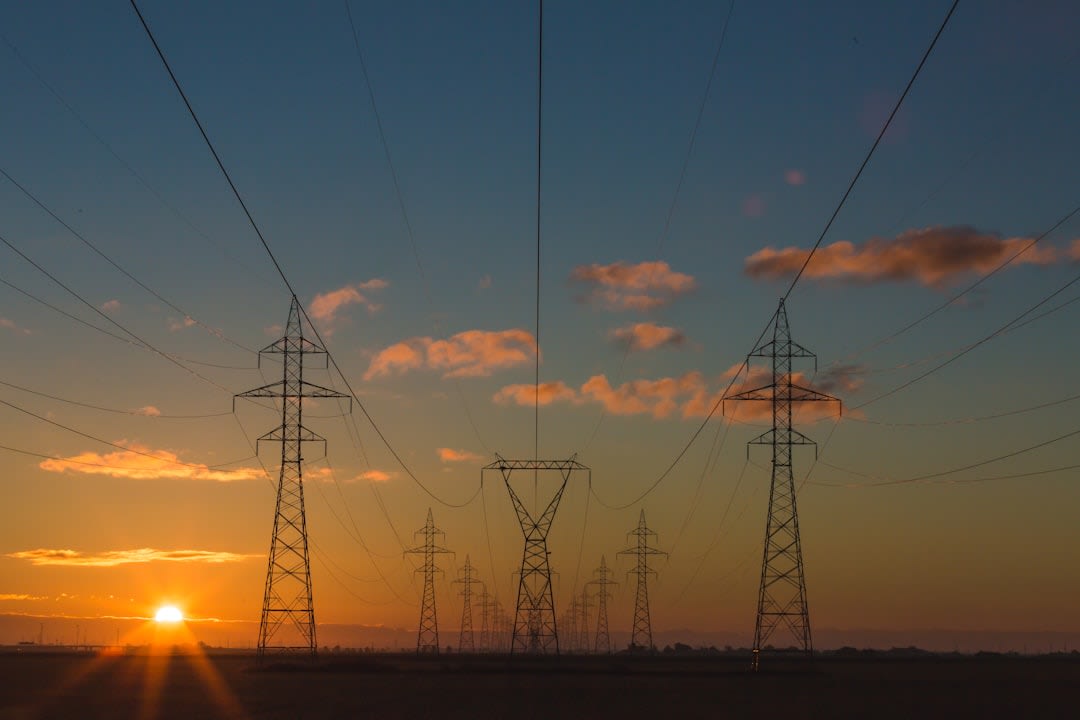
- •Satheesan announced on September 16, 2026, that his government is coordinating with eight States and power sector agencies to address an unprecedented monsoon-season power crisis, as the Kerala State Electricity Board (KSEB) imposes unannounced curbs due to soaring demand and supply shortages.
- •The crisis underscores a systemic vulnerability: Kerala meets only 30% of its electricity needs through internal generation, primarily hydropower, while 70% relies on imports from Central Generating Stations (CGS) and interstate purchases.
- •With AI-driven industries like data centers and semiconductor plants set to amplify demand, the state faces a critical juncture in its energy transition.
Kerala Chief Minister V.D. Satheesan announced on September 16, 2026, that his government is coordinating with eight States and power sector agencies to address an unprecedented monsoon-season power crisis, as the Kerala State Electricity Board (KSEB) imposes unannounced curbs due to soaring demand and supply shortages. The crisis underscores a systemic vulnerability: Kerala meets only 30% of its electricity needs through internal generation, primarily hydropower, while 70% relies on imports from Central Generating Stations (CGS) and interstate purchases. With AI-driven industries like data centers and semiconductor plants set to amplify demand, the state faces a critical juncture in its energy transition.
The Anatomy of a Power Crisis
Kerala’s electricity demand surged by 925 MW in September 2026 compared to the same month last year, according to KSEB data. On September 14, total consumption reached 94.44 million units (mu), with imports accounting for 70.82 mu—nearly three-quarters of the state’s energy needs. The crisis stems from a confluence of factors: weak monsoons depleting hydropower reservoirs, El Niño-driven heatwaves increasing cooling demand, and a national power-generation deficit. Unlike neighboring Tamil Nadu, Kerala’s power-purchasing costs are capped by the Kerala State Electricity Regulatory Commission, complicating efforts to secure emergency supplies at competitive rates.
- ▸30% of Kerala’s power comes from internal hydropower.
- ▸70.82 mu of electricity imported on September 14, 2026.
- ▸925 MW increase in demand compared to September 2025.
- ▸KSEB’s curbs have drawn public criticism for unannounced, frequent outages.
Energy Security and the Renewable Imperative
The crisis highlights Kerala’s struggle with Energy Security—defined by the International Energy Agency as “uninterrupted availability of energy at affordable prices.” The state’s heavy reliance on external supplies exposes it to geopolitical and market volatility. While solar capacity has grown under schemes like the National Solar Mission, the absence of grid-scale battery storage or pumped storage projects has left Kerala vulnerable to supply-demand mismatches.
“Renewable energy backed by commensurate storage capacity is Kerala’s panacea for green power,” CM Satheesan stated, signaling a pivot away from hydropower expansion, which he deemed “environmentally and financially unviable.” The government plans to enlist private sector expertise to boost generation, while exploring long-term power purchase agreements with thermal and nuclear plants. However, KSEB’s failure to modernize infrastructure—particularly storage systems—has been criticized as a strategic oversight.
Did You Know? Kerala’s power imports surged by 70.82 million units on a single day in September 2026, equivalent to powering over 1.5 million homes for 24 hours.
The AI Boom and Infrastructure Gaps
Kerala’s ambition to attract AI-driven industries, such as semiconductor manufacturing and data centers, could further strain its power grid. These sectors require uninterrupted, high-quality electricity, yet KSEB’s infrastructure lacks the resilience to support such demand. The state’s regulatory framework, which limits power-purchasing costs, may deter private investors unless paired with storage solutions like Small Modular Reactors or advanced battery systems.
The PM-KUSUM scheme, which promotes solar-powered agriculture and decentralized generation, could offer a model for Kerala’s distributed energy strategy. However, scaling such initiatives requires significant investment in storage and grid modernization—areas where KSEB has lagged.
Policy Shifts and Long-Term Viability
The UDF government’s revised power policy aims to balance immediate relief with long-term sustainability. By negotiating bilateral agreements with states like Odisha and Himachal Pradesh, Kerala seeks to diversify its energy sources. Yet, the absence of pumped storage projects—a technology that stores excess energy as pressurized water—leaves a critical gap in managing monsoon-season fluctuations.
Experts argue that Kerala’s energy future hinges on integrating renewable generation with storage and smart grid technologies. Without such measures, the state risks repeating crises during peak demand periods, undermining its economic ambitions.
Tags
Concepts Mentioned
PM-KUSUM
PM-KUSUM is a scheme to promote solar farming, mattering for UPSC as it relates to renewable energy and rural development. It aims to reduce dependence on fossil fuels. Launched in 2019, it is a key initiative under the Ministry of New and Renewable Energy.
Small Modular Reactors
Small Modular Reactors are compact nuclear reactors. They offer significant advantages, including scalability and cost-effectiveness. The US-based NuScale Power is a notable example.
National Solar Mission
The National Solar Mission is India's initiative to promote solar energy. It aims to reduce dependence on fossil fuels. Launched in 2010, it targets 100 GW of solar power capacity.
Energy Security
Energy security refers to a nation's ability to ensure a reliable supply of energy. It is significant for economic growth and development. The US imports nearly 40% of its oil from foreign sources.
Central Generating Stations
Central Generating Stations (CGS) are large, high‑capacity power plants owned and operated by the central government to supply electricity across the national grid. They provide base‑load power, ensure grid stability, and support industrial growth. The 2,000 MW Vindhyachal Thermal Power Station in Madhya Pradesh is India's largest CGS.
Log in to like, comment, and join the discussion.