CSIR-CFTRI Develops AI-Powered Food Processing Technologies
Scientists at CSIR-CFTRI are developing AI-driven technologies to improve food processing and reduce post-harvest losses. This development is significant as it addresses longstanding challenges in the food sector, such as fungal contamination and storage management. The new technology has the potential to scale up to large warehouses, handling quantities of up to lakhs of tonnes of food grains.
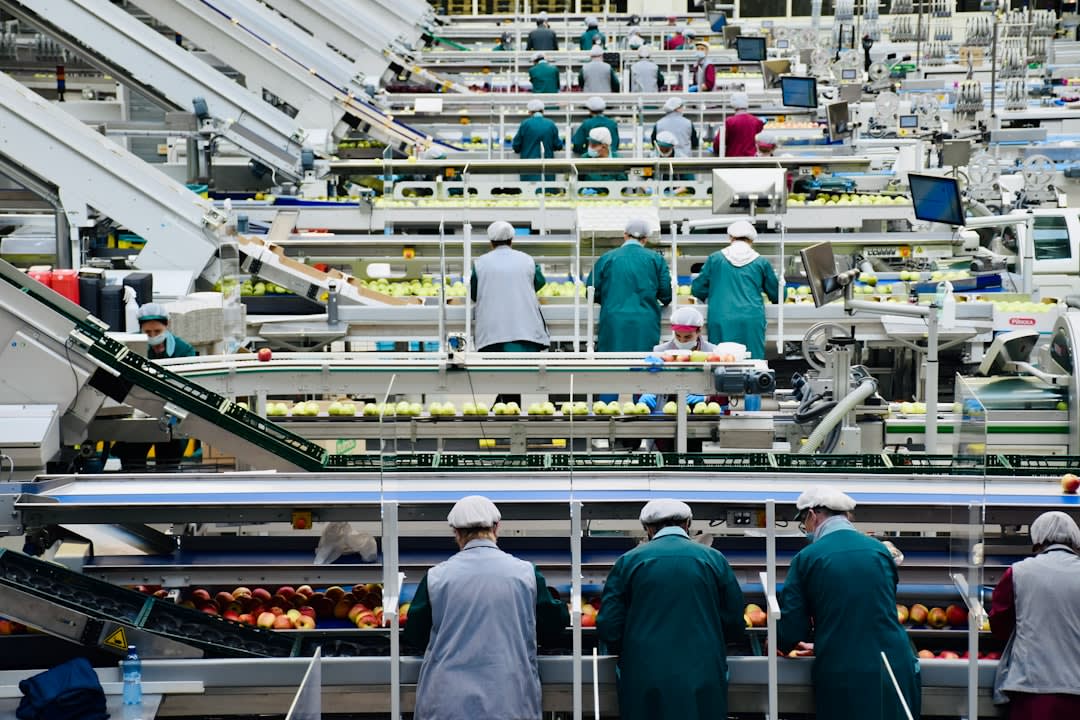
- •The integration of artificial intelligence (AI) in food processing is a significant development, with the Council of Scientific and Industrial Research–Central Food Technological Research Institute (CSIR-CFTRI) in Mysuru exploring ways to leverage AI-driven technologies for societal benefit.
- •This initiative aims to address longstanding challenges in the food sector, including post-harvest management and food safety.
- •One key area of focus is tackling fungal contamination in food grains and other commodities during storage.
The integration of artificial intelligence (AI) in food processing is a significant development, with the Council of Scientific and Industrial Research–Central Food Technological Research Institute (CSIR-CFTRI) in Mysuru exploring ways to leverage AI-driven technologies for societal benefit. This initiative aims to address longstanding challenges in the food sector, including post-harvest management and food safety. One key area of focus is tackling fungal contamination in food grains and other commodities during storage.
- ▸The Food Safety and Standards Act 2006 regulates food safety in India.
- ▸The National Food Security Mission aims to increase food production.
- ▸Artificial Intelligence is being used to improve food processing.
How AI Works in Food Processing
AI can be used to identify and separate healthy onions from fungal-infected ones, reducing post-harvest losses. Additionally, AI algorithms can be developed for grading and sorting food products, enabling faster and more accurate quality assessment. The use of AI in food processing can also help in predicting and preventing food spoilage, reducing food waste, and improving the overall efficiency of the food supply chain.
- ▸The Agricultural Produce Market Committee (APMC) Act governs agricultural markets.
- ▸Machine Learning is a subset of AI used in food processing.
- ▸The National Policy on Agriculture aims to increase agricultural production.
Significance and Challenges
The application of AI in food processing has the potential to transform the food industry, improving food safety, reducing waste, and increasing efficiency. However, there are also challenges associated with the adoption of AI in food processing, including the need for significant investment in infrastructure and technology, as well as the requirement for skilled personnel to develop and implement AI solutions.
Did You Know? The use of AI in food processing can help reduce food waste by up to 50%, which is a significant challenge in India, where an estimated 40% of food production is lost due to inefficient supply chains.
- ▸The Indian Council of Agricultural Research (ICAR) promotes agricultural research.
- ▸Data Analytics is used in food processing to predict trends.
- ▸The Food Corporation of India (FCI) manages food grain storage.
Way Forward
To fully realize the potential of AI in food processing, it is essential to address the challenges associated with its adoption, including the need for investment in infrastructure and technology, as well as the development of skilled personnel. Additionally, there is a need for regulatory frameworks to ensure the safe and effective use of AI in food processing.
- ▸The Ministry of Food Processing Industries promotes food processing.
- ▸Blockchain Technology can be used to track food supply chains.
- ▸The National Institute of Food Technology Entrepreneurship and Management (NIFTEM) provides training in food technology.
Concepts Mentioned
Data Analytics
Data analytics is the process of examining data to gain insights. It is significant for informed decision-making. Walmart uses data analytics to optimize supply chains.
Indian Council of Agricultural Research (ICAR)
The Indian Council of Agricultural Research is a premier agricultural research institution. It plays a significant role in agricultural development, with 101 ICAR institutes across India, including the Indian Agricultural Research Institute.
National Policy on Agriculture
The National Policy on Agriculture aims to increase agricultural production and farmers' income. It is significant for the country's food security and rural development. The policy was first introduced in 2000.
Machine Learning
Machine learning is a subset of artificial intelligence. It enables systems to learn from data, improving performance over time. Google's image recognition relies on it.
Agricultural Produce Market Committee Act
The Agricultural Produce Market Committee (APMC) Act is a state-level legislation in India that regulates the marketing of agricultural produce. It aims to ensure fair prices for farmers and provide a platform for them to sell their produce. For instance, Maharashtra's APMC Act, enacted in 1963, has been instrumental in establishing a robust market infrastructure for farmers in the state.
artificial intelligence
Artificial intelligence (AI) refers to the development of computer systems that can perform tasks typically requiring human intelligence, such as learning, problem-solving, and decision-making. This field has significant implications for various industries, including healthcare, finance, and transportation. For instance, AI-powered virtual assistants, like Siri and Alexa, can understand and respond to voice commands.
National Food Security Mission
National Food Security Mission is a government program aimed at increasing crop production and food security. It matters for UPSC as it relates to agriculture and rural development. Launched in 2007, it focuses on rice, wheat, and pulses.
Food Safety and Standards Act 2006
The Food Safety and Standards Act 2006 is a law regulating food safety in India. It consolidates various laws, ensuring a single authority oversees the sector. The Act established the Food Safety and Standards Authority of India.
Log in to like, comment, and join the discussion.