Delhi High Court Dismisses Plea Against Arrest: Judicial Review in Protest Cases
On September 7, 2026, the Delhi High Court rejected a petition by Hindutva influencer Swatantra Bhardwaj seeking relief from his arrest related to an alleged assault at a Jantar Mantar protest. The ruling underscores the court’s role in exercising judicial review over executive and police actions, affirming procedural safeguards in custodial matters. The bench, comprising Justices Navin Chawla and Ravinder Dudeja, noted that Bhardwaj re in custody per the trial court’s order and can only contest the arrest before that court
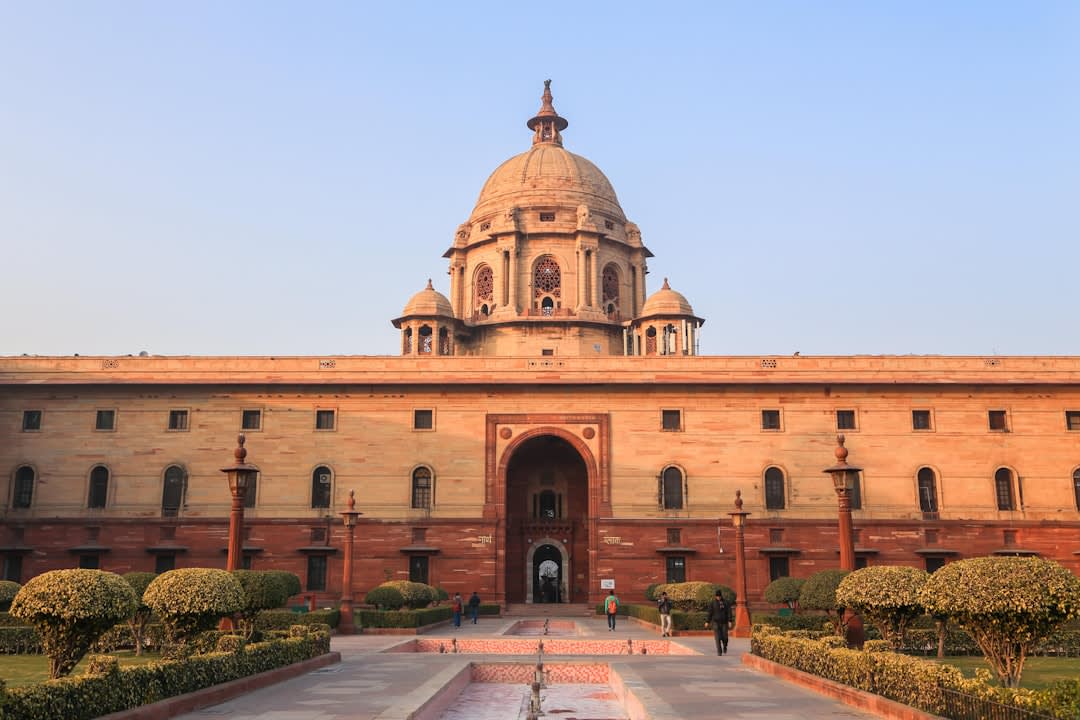
- •The Delhi High Court on Monday dismissed a petition challenging the arrest of Hindutva influencer Swatantra Bhardwaj in connection with an alleged assault during a protest at Jantar Mantar, underscoring the judiciary’s role in scrutinizing executive actions under constitutional provisions.
- •The court ruled that Bhardwaj’s custody was lawful in pursuance of judicial orders, dismissing his counsel’s argument that even a day’s detention was illegal.
- •The case highlights the tension between individual rights and state authority, particularly in the context of public demonstrations and the legal mechanisms available for challenging arrests.
The Delhi High Court on Monday dismissed a petition challenging the arrest of Hindutva influencer Swatantra Bhardwaj in connection with an alleged assault during a protest at Jantar Mantar, underscoring the judiciary’s role in scrutinizing executive actions under constitutional provisions. The court ruled that Bhardwaj’s custody was lawful in pursuance of judicial orders, dismissing his counsel’s argument that even a day’s detention was illegal. The case highlights the tension between individual rights and state authority, particularly in the context of public demonstrations and the legal mechanisms available for challenging arrests.
Legal Framework of Judicial Review
Judicial review in India empowers courts to examine the constitutionality of legislative and executive actions, rooted in the Constitution’s foundational architecture. Article 226 empowers High Courts to issue writs against unlawful state action, while Article 32 provides a parallel mechanism at the Supreme Court level. The Maneka Gandhi Judgment (1978) significantly expanded Article 21’s guarantee of “personal liberty,” mandating procedural fairness in arrests and detentions. This principle ensures that state action must not only be lawful but also just and reasonable.
- ▸Article 226 enables High Courts to review administrative actions for legality.
- ▸The Maneka Gandhi Judgment mandates procedural due process in arrests.
- ▸Article 21 protects personal liberty, subject to reasonable restrictions.
- ▸The Supreme Court’s quashing of certain FIRs in the Cockroach Janta Party (CJP) protests illustrates its oversight role.
Application to Bhardwaj’s Case
The Delhi High Court emphasized that Bhardwaj was produced before a sessions judge via video conferencing and remanded to one-day police custody, a process deemed legally valid. His counsel argued that the FIR was quashed by the Supreme Court, rendering his arrest illegal. However, the court clarified that the specific FIR in question had not been invalidated, distinguishing it from other cases. This distinction underscores the nuanced application of judicial review, where courts assess the legality of specific orders rather than blanket assumptions.
- ▸Bhardwaj was produced via video conferencing before a sessions judge.
- ▸The Delhi Police argued the FIR was not quashed, countering the petition.
- ▸The court noted judicial remand as a valid exercise of authority.
- ▸The Protection of Human Rights Act 1993 provides additional safeguards for detainees.
Did You Know? Video conferencing for judicial proceedings, now routine post-pandemic, was first piloted in Delhi High Court cases in 2020 to expedite bail and remand hearings.
Broader Implications for Protest-Related Arrests
The case reflects ongoing debates about the balance between public order and civil liberties during protests. While the state has authority to maintain law and order, the judiciary acts as a check on arbitrary arrests. The Supreme Court’s earlier rulings on quashing FIRs related to the CJP protests demonstrate its willingness to intervene in politically sensitive cases. However, the Delhi High Court’s dismissal of Bhardwaj’s plea signals judicial deference to lower court orders, provided procedural norms are followed.
- ▸The Supreme Court’s 2023 ruling in the Jiram Valley case highlighted concerns over political interference in investigations.
- ▸The Unlawful Activities (Prevention) Act 1967 allows preventive detention, subject to judicial scrutiny.
- ▸Activists often challenge arrests under Article 226, citing violations of freedom of speech.
Challenges in Balancing Rights and Security
Critics argue that the legal framework for protest-related arrests remains ambiguous, with laws like the UAPA enabling prolonged detentions. The Delhi High Court’s ruling reinforces the principle that custody must align with judicial directives, but it also raises questions about the scope of judicial oversight in politically charged cases. The case of Bhardwaj, a prominent public figure, underscores the need for transparency in arrest procedures and the role of courts in safeguarding constitutional rights.
- ▸The Unlawful Activities (Prevention) Act 1967 permits extended detention without charge.
- ▸The Supreme Court’s 2023 judgment in the Jiram Valley case questioned the adequacy of judicial inquiries.
- ▸Activists frequently invoke Article 226 to challenge arrests as violations of Right to Freedom of Speech.
Conclusion
The Delhi High Court’s dismissal of Bhardwaj’s plea reaffirms the judiciary’s role in upholding procedural legality while navigating the complexities of protest-related arrests. It highlights the enduring relevance of constitutional safeguards in a democratic polity, where the balance between security and liberty remains a dynamic and contested terrain.
Tags
Concepts Mentioned
Right to Freedom of Speech
The Right to Freedom of Speech is a constitutional guarantee allowing individuals to express opinions, ideas, and information without undue government restraint. It underpins democratic discourse, accountability, and personal autonomy. As seen in the United States, the First Amendment protected student protest speech in the 1969 Tinker v. Des Moines Supreme Court ruling.
Unlawful Activities (Prevention) Act, 1967
The Unlawful Activities (Prevention) Act, 1967, is a legislation aimed at preventing and punishing unlawful activities in India. It empowers the government to designate organizations and individuals as terrorist groups and impose restrictions on their activities. For instance, the Act was used to ban the Maoist Communist Centre of India in 2002, a left-wing extremist group operating in several states.
Protection of Human Rights Act 1993
The Protection of Human Rights Act 1993 is a law that protects human rights in India. It established the National Human Rights Commission, a statutory body to investigate rights violations. The Act has significant implications for human rights protection.
Maneka Gandhi Judgment
The Maneka Gandhi Judgment is a landmark Supreme Court decision. It established the right to travel abroad as part of personal liberty. The 1978 judgment ruled in favor of Maneka Gandhi, whose passport was revoked by the government.
Log in to like, comment, and join the discussion.