India-China Border Maps and Kashmir's Cultural Renaissance: A Constitutional and Diplomatic Crossroads
The Chief Minister of Jammu and Kashmir inaugurated a film festival to promote the region as a global filmmaking destination, emphasizing its cultural heritage and Kashmiriyat. The initiative seeks to revive tourism and creative industries following the abrogation of Article 370, which previously granted special status to the state. The festival aims to attract international filmmakers while re-engaging local youth in cultural activities, echoing the 1960s era when Kashmir became a popular filming location for Hindi cinema.
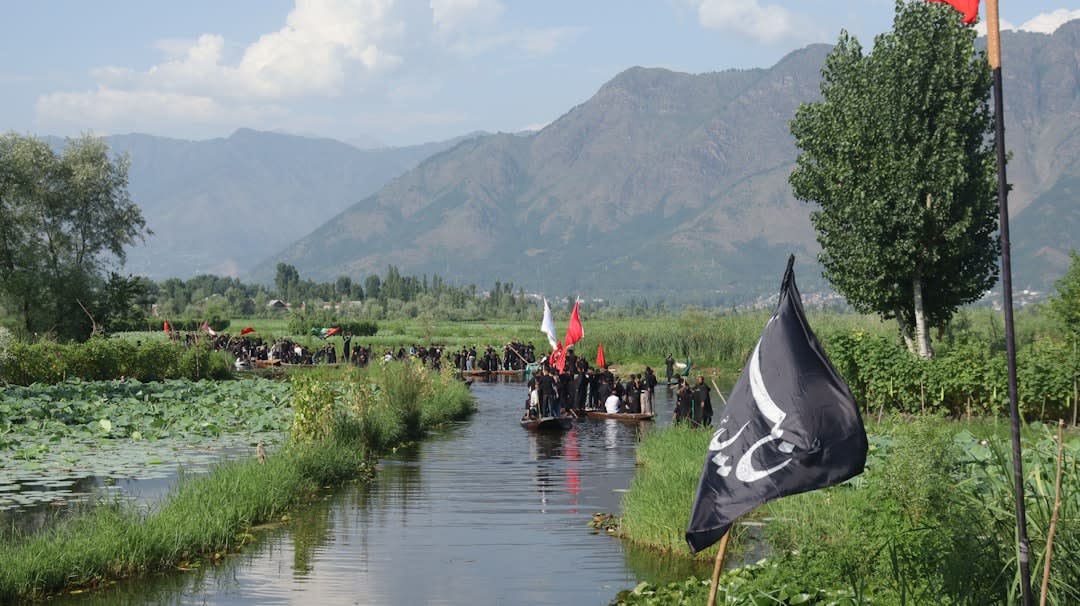
- •The recent UN endorsement of a world map depicting India’s Arunachal Pradesh and Aksai Chin as disputed territories between Indian and Chinese claim lines has reignited debates over India’s constitutional architecture and diplomatic strategy.
- •Simultaneously, the inauguration of Kashmir’s first international film festival in three decades signals a cultural recalibration in the Union Territory, underscoring the interplay between constitutional governance and regional identity.
- •Together, these developments illuminate the evolving dynamics of India’s territorial integrity and its soft power projection in the post-2019 era.
The recent UN endorsement of a world map depicting India’s Arunachal Pradesh and Aksai Chin as disputed territories between Indian and Chinese claim lines has reignited debates over India’s constitutional architecture and diplomatic strategy. Simultaneously, the inauguration of Kashmir’s first international film festival in three decades signals a cultural recalibration in the Union Territory, underscoring the interplay between constitutional governance and regional identity. Together, these developments illuminate the evolving dynamics of India’s territorial integrity and its soft power projection in the post-2019 era.
The UN Map Controversy and Constitutional Implications
The UN’s July 2026 map, endorsed during India’s “Correct the Map” resolution, explicitly labels Arunachal Pradesh’s southern border with Assam as the “Chinese line” and its northern border as the “Indian line,” while omitting its border with Nagaland. Similarly, Aksai Chin’s eastern frontier is marked as the “Indian line,” contrasting with its western boundary labeled as the “Chinese line.” This cartographic ambiguity mirrors the unresolved status of Jammu and Kashmir, noted in a disclaimer on the map.
- ▸The map’s depiction of Arunachal Pradesh’s borders diverges from India’s official territorial boundaries.
- ▸Aksai Chin, administered by India as part of Ladakh since the 104th Constitutional Amendment, is shown as a contested region.
- ▸The Line of Control (LoC) in Jammu and Kashmir is marked with a dotted line, acknowledging its disputed nature under Article 370.
The map’s non-binding nature does not diminish its symbolic weight, as multilateral institutions often rely on such visual representations. For India, the resolution represents a rare diplomatic victory in challenging historical misrepresentations. However, it also highlights the enduring complexity of the Line of Actual Control (LAC), where India and China maintain de facto control over disputed territories without formal demarcation.
The Constitutional Architecture of J&K’s Special Status
The constitutional framework for Jammu and Kashmir’s integration into India was anchored in Article 370, which granted the State autonomous powers by limiting the application of central laws. Article 35A, inserted via a Presidential Order in 1954, empowered the State Legislature to define “permanent residents” and confer special rights in property, employment, and scholarships. This dual provision created a unique federal structure, balancing autonomy with integration.
- ▸The Supreme Court’s Kesavananda Bharati Case (1973) affirmed that Article 370’s provisions were amendable under Article 368, a principle later invoked in 2019.
- ▸The 101st Constitutional Amendment and the Constitution (Application to Jammu and Kashmir) Order, 2019, abrogated Article 370, bifurcating the State into two Union Territories.
The abrogation marked a seismic shift in India’s federal model, dissolving the special status while preserving the region’s cultural and territorial integrity. The UN map’s ambiguity, however, underscores the unresolved nature of border disputes that predate constitutional changes.
Kashmir’s Cultural Renaissance: Cinema as a Diplomatic Tool
The Kashmir International Film Festival, inaugurated on September 7, 2026, signals a deliberate effort to reimagine the region’s global image. Chief Minister Omar Abdullah framed the event as “a new chapter in the long-standing relationship between J&K and cinema,” emphasizing Kashmiriyat—the ethos of harmony and cultural richness.
- ▸The festival features 135 films from 41 countries, screened across Srinagar, Gulmarg, and Jammu under heavy security.
- ▸A floating cinema on Dal Lake merges tradition with modernity, reflecting the region’s artistic legacy.
This cultural revival aligns with broader efforts to counter militancy’s legacy and promote tourism. The 2023 G20 Tourism Working Group Meeting in Srinagar marked a prior milestone, but the film festival represents a sustained push to position Kashmir as a creative and inclusive destination.
Did You Know? The UN’s “Correct the Map” resolution, sponsored by Togo and supported by the African Union, was framed as “cognitive justice” to decolonize global cartography. India’s advocacy for accurate representation of its territories reflects a strategic use of multilateral diplomacy to counter historical misnarratives.
Federal Dynamics and the Road Ahead
The juxtaposition of constitutional changes and cultural initiatives reveals India’s dual approach to Kashmir: legal restructuring coupled with socio-cultural reintegration. The abrogation of Article 370 centralized governance, while the film festival and tourism projects aim to rebuild local confidence. Yet, the UN map’s ambiguity reminds us that territorial disputes remain a diplomatic frontier, requiring both legal clarity and soft power engagement.
For policymakers, the challenge lies in balancing constitutional authority with regional aspirations. The 101st Constitutional Amendment reshaped J&K’s governance, but sustainable peace demands addressing the socio-economic roots of conflict. Similarly, the film festival’s success hinges on translating cultural symbolism into tangible opportunities for youth and entrepreneurs.
As India navigates these complexities, the interplay between constitutional law, diplomatic representation, and cultural expression will define its approach to Kashmir’s future.
Tags
Concepts Mentioned
101st Constitutional Amendment
The 101st Constitutional Amendment introduced the Goods and Services Tax, a significant tax reform. It matters for UPSC as it is a key aspect of Indian polity and economy. The amendment enabled the Centre and states to levy and collect GST.
Kesavananda Bharati Case
The Kesavananda Bharati Case is a landmark Supreme Court judgment. It established the doctrine of basic structure of the Constitution. The 1973 case ruled that Parliament cannot alter the Constitution's fundamental features.
Article 35A
Article 35A, introduced by a presidential order in 1955, allows the Jammu and Kashmir legislature to define “permanent residents” and grant them exclusive rights to land, jobs and scholarships. It has been central to preserving the state’s distinct identity, illustrated by the prohibition on non‑residents purchasing property in the valley.
Line of Actual Control
The Line of Actual Control (LAC) is the de‑facto border that separates Indian‑administered and Chinese‑administered territories in the Himalayas. It serves as a cease‑fire line, shaping diplomatic and military posture of both nations. In 2020, a standoff at the Galwan Valley along the LAC resulted in the first combat deaths between the two armies in decades.
Article 370
Article 370 was a provision in the Indian Constitution that granted the state of Jammu and Kashmir a special autonomous status, allowing it to have its own constitution, flag, and limited powers of the Indian Parliament. Because of this, laws on citizenship, property ownership and fundamental rights could be applied differently in the region than in the rest of India.
Log in to like, comment, and join the discussion.