Rainfall Patterns and the Monsoon Engine
The India Meteorological Department issued a weekend forecast of heavy rain, thunderstorms and lightning for West Bengal, driven by strong moisture influx from the Bay of Bengal. The outlook highlights the monsoon’s intensifying impact on eastern India, where flood hazards and extreme humidity are already straining urban infrastructure. Northern districts face severe flood risk while southern districts anticipate humidity above 90% and squalls with winds up to 50 km/h.
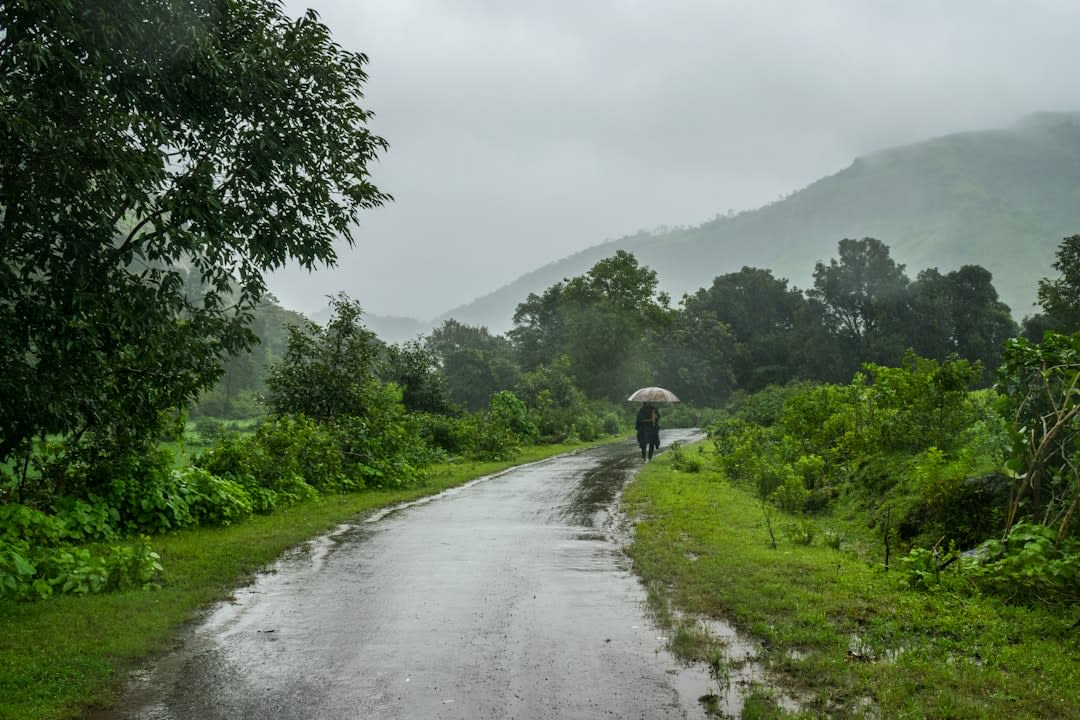
- •West Bengal Thunderstorms and Karnataka Dry Spell: Monsoon’s Uneven Reach
West Bengal Thunderstorms and Karnataka Dry Spell: Monsoon’s Uneven Reach
Heavy rain and lightning are forecast across West Bengal this weekend, while Karnataka records a June rainfall shortfall of up to 54 per cent. The contrasting weather patterns underscore how the same monsoon system can bring flood‑risk to one region and drought‑stress to another, with immediate implications for urban drainage, agriculture and disaster preparedness.
The India Meteorological Department attributes the impending showers to a favourable atmospheric set‑up and strong moisture incursion from the Bay of Bengal. The Bay’s warm sea‑surface temperatures (averaging 30 °C in June) fuel intense convection, a hallmark of the Indian Monsoon that typically peaks between late June and early September.
- ▸The monsoon entered Kolkata on 11 June with a meagre 1.4 mm of rain recorded at Alipore.
- ▸From 12 June to 17 June the same station logged zero rainfall, the longest dry spell since the onset of the season.
- ▸Forecasted wind gusts of 40–50 km h⁻¹ accompany thunderstorms across Nadia, Murshidabad and Birbhum districts.
These dynamics illustrate the “burst‑type” nature of the South Asian Monsoon, where episodic pulses of moisture can arrive after days of stagnation, creating sharp spatial gradients in precipitation.
Impact on Urban West Bengal
Kolkata’s low‑lying neighbourhoods—Shyambazar, Hatibagan, Central Avenue, Dhakuria and Gariahat—have already experienced water‑logging as the city’s drainage network struggles to cope with sudden runoff. The city lies on the eastern fringe of the Ganges Basin, where alluvial soils and a dense urban fabric amplify flood vulnerability.
- ▸Over 30 per cent of Kolkata’s municipal area is classified as flood‑prone under the 2015 urban flood map.
- ▸The recent thunderstorms are expected to raise river levels in the Hooghly by 0.5 m within 12 hours, breaching critical embankments.
Did You Know? The Hooghly River’s tidal reach extends up to 100 km inland, meaning that even modest sea‑level rises can magnify inland flooding during monsoon surges.
Karnataka’s Dry Spell: Spatial Disparities
The Karnataka State Natural Disaster Monitoring Centre reports a June rainfall departure of ‑35 per cent. While coastal districts received 191 mm against a normal 419 mm (‑54 per cent), interior zones fared only slightly better, with south interior at 44 mm (‑6 per cent) and north interior at 53 mm (‑16 per cent).
- ▸Malnad’s catchments, which feed the Krishna and Cauvery rivers, saw rainfall halved, threatening reservoir inflows.
- ▸The deficit coincides with a heatwave in Telangana, where temperatures breached 42 °C in Hyderabad.
These figures reveal how the monsoon’s moisture plume, though robust over the Bay, can be diverted northward by the Western Ghats, leaving the rain‑shadow zones of Karnataka arid.
Geographical Underpinnings of Flood and Drought Risk
The divergent outcomes stem from three geographic factors. First, orographic lift over the Eastern Ghats channels moisture toward West Bengal, while the Western Ghats block it, creating a rain‑shadow. Second, the soil texture—clay‑rich alluvium in the Ganges Basin versus lateritic soils in Karnataka—determines infiltration rates and runoff speed. Third, river basin connectivity influences how quickly excess rain translates into flood peaks or, conversely, how drought conditions affect downstream water availability.
- ▸The Ganges Basin drains an area of 1.08 million km², with a mean annual runoff of 1,200 mm, making it highly sensitive to short‑term precipitation spikes.
- ▸Karnataka’s interior basins cover roughly 300 000 km², but their reliance on monsoon‑fed reservoirs makes them vulnerable to even modest rainfall deficits.
Policy and Preparedness
India’s disaster management framework, anchored in the Sendai Framework for Disaster Risk Reduction, obliges the National Disaster Management Authority to integrate climate forecasts into urban planning. In West Bengal, the state has begun upgrading storm‑water drains in Kolkata’s central wards, yet the pace lags behind the rapid urbanisation that expands impermeable surfaces.
- ▸The NDMA’s 2023 guideline recommends a minimum drainage capacity of 0.5 m³ s⁻¹ per km of arterial road in flood‑prone cities.
- ▸Karnataka’s drought response plan calls for targeted micro‑irrigation schemes, but funding gaps have delayed implementation in the most affected districts.
A coordinated approach that respects the spatial heterogeneity of monsoon impacts—combining real‑time rainfall monitoring, basin‑wide water‑resource management and resilient urban infrastructure—will be essential to mitigate both flood and drought hazards.
Concepts Mentioned
National Disaster Management Authority
The National Disaster Management Authority is a government agency responsible for disaster management. It plays a crucial role in mitigating disasters. India's NDMA was established in 2005.
Sendai Framework for Disaster Risk Reduction
The Sendai Framework is a global plan for disaster risk reduction, aiming to reduce disaster losses. It is significant for promoting resilience and sustainability. Adopted in 2015, it has seven targets.
Ganges Basin
The Ganges Basin is a vast river basin in South Asia. It is significant due to its fertile soil and water resources. The basin spans over 400,000 square miles.
South Asian Monsoon
The South Asian Monsoon is a seasonal weather pattern bringing heavy rainfall to the region. It is crucial for agriculture and water supply. India receives nearly 70% of its annual rainfall during this period.
monsoon
A monsoon is a seasonal weather pattern bringing significant rainfall. It is crucial for agriculture and water supply. India's southwest monsoon is a notable example.
Bay of Bengal
The Bay of Bengal is a large body of water located in the Indian Ocean. It is significant for regional trade and commerce. The Ganges River empties into it.
Log in to like, comment, and join the discussion.